
What Happens When We “Drive Out” the Homeless?
~Can you help me understand what happens when a city “drives out” the homeless?
~What methods are used? What are their effects?
~Who is involved?
~ Why do people choose this?
~What gaslighting shows up in this discourse?
~Ultimately, what are the outcomes for the homeless?
~What are the outcomes for the rest of the community?
Cities “drive out” the homeless through a mix of legal, logistical, and symbolic tactics that often prioritize visibility and control over care. These actions can devastate unhoused individuals while offering communities a false sense of resolution.
🚓 Methods Used to “Drive Out” the Homeless
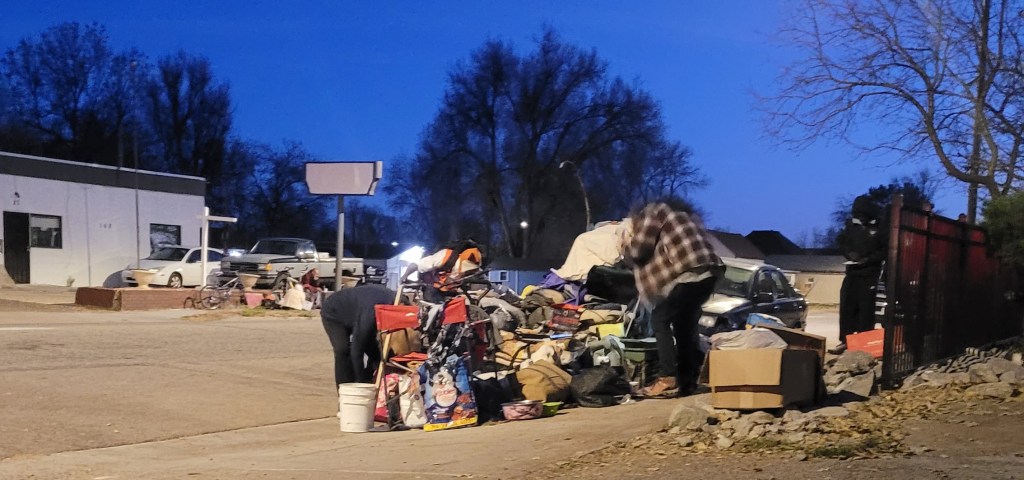
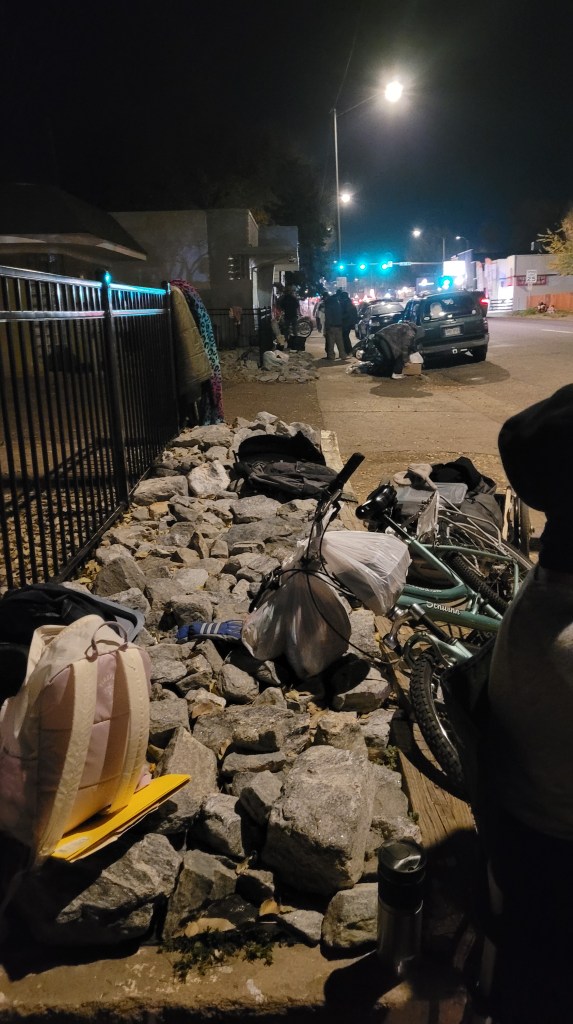
- Encampment Sweeps: Cities forcibly remove tents and belongings from public spaces, often without adequate notice or alternatives. These sweeps routinely destroy vital items like IDs, medications, and work tools.
- Bussing Programs: Some cities offer one-way tickets to other locations, claiming people will reunite with family or find housing. Many recipients end up homeless again, often in unfamiliar cities.
- Camping Bans and Ordinances: Laws criminalize sleeping in public, loitering, or panhandling, pushing people into jail or out of sight.
- Service Zoning: Designating “drug-free” or “no-camping” zones around shelters or public buildings limits access to aid and concentrates enforcement.
- Policing and Surveillance: Increased patrols, citations, and arrests target unhoused individuals for minor infractions, creating a cycle of criminalization.
🧠 Effects of These Methods
- For the homeless: Loss of belongings, trauma, disrupted access to services, and deeper entrenchment in poverty. Sweeps can erase months of progress toward employment or housing.
- For cities: Temporary visual relief, but no reduction in homelessness. Resources are diverted from housing and care to enforcement and cleanup.
- For service providers: Increased strain, as displaced individuals become harder to locate and support.
🏛️ Who Is Involved
- City governments: Mayors, councils, and public works departments authorize and execute policies.
- Law enforcement: Police and sanitation workers carry out sweeps and enforcement.
- Advocacy groups: Often resist these actions, document abuses, and push for humane alternatives.
- Residents and businesses: Their complaints often drive political pressure to “clean up” areas.
💭 Why People Choose These Tactics
- Political optics: Leaders want to appear responsive to public concerns.
- Economic interests: Businesses and developers push for “clean” streets to protect property values.
- Public discomfort: Many residents feel unsafe or disturbed by visible homelessness and seek quick fixes.
🔥 Gaslighting in the Discourse
- “We’re helping them”: Cities claim sweeps are for safety or service access, even when they destroy vital belongings.
- “They chose this”: Framing homelessness as a lifestyle choice erases systemic causes like housing costs, trauma, and disability.
- “It’s working”: Officials tout reduced visibility as success, ignoring data showing homelessness persists or worsens.
🧍♂️ Outcomes for the Homeless
- Displacement: Forced movement without support leads to isolation and increased risk.
- Criminalization: Legal records from citations or arrests make housing and employment harder.
- Loss of trust: Repeated sweeps erode faith in public systems and services.
🏘️ Outcomes for the Community
- False sense of resolution: Visibility decreases, but root issues remain.
- Increased costs: Enforcement and cleanup are expensive and cyclical.
- Moral erosion: Communities risk normalizing cruelty and exclusion as policy.


















Don’t Believe Me?
- ProPublica. (2024). Swept Away: What Cities Really Take When They Sweep Homeless Encampments.
Link to article
Summary: This investigative piece documents the human cost of encampment sweeps across 16 U.S. cities. It details the destruction of vital belongings—IDs, medications, work tools—and the cascading setbacks unhoused individuals face.
Relevance: Offers forensic evidence of symbolic and material dispossession. Ideal for visual aids and survivor testimony, especially in moral quadrant framing around dignity and economic sabotage.
Quote: “I was trying to get off the streets, but they set me back. It’s not easy getting services, and trying to find work, and trying to save.” - Brookings Institution. (2024). Despite a National Spike in Homelessness, Some US Regions Are Finding Solutions.
Link to article
Summary: Analyzes regional variations in homelessness trends using HUD’s Point-in-Time data. Highlights cities like Austin and Indianapolis that reduced homelessness through targeted, humane interventions.
Relevance: Useful for comparative framing—contrasting punitive displacement with evidence-based alternatives. Supports strategic mapping of policy outcomes and regional success stories.
Quote: “Cities have the evidence and tools at their disposal to reduce homelessness—there just needs to be the political will to invest in and scale them.” - Cicero Institute. (2025). What Cities Can Do Today to Address Homelessness Better.
Link to article
Summary: Discusses policy failures and offers pragmatic reforms, including data collection, budget audits, and street-level interventions. Critiques the overemphasis on housing as a costly and limited solution.
Relevance: Valuable for forensic budget analysis and audit strategy. Highlights systemic mismanagement and opens pathways for procedural critique in local government.
Quote: “In Los Angeles, a federal lawsuit resulted in a third-party audit that demonstrated poor financial management, lack of programmatic performance, and a system in disarray.”

 Operation **Reclaim** Loveland
What do you think?