
Re: [External] Burnes Center on Poverty and Homelessness Report
MEMORANDUM TO: City of Loveland Staff CC: City Council members, City of Loveland FROM: Daniel Brisson, Executive Director DATE: September 16, 2019 RE: City of Loveland Strategic Plan to Address Homelessness
On Jul 26, 2023, at 14:01, erin black <erinblack490@msn.com> wrote:
Hi All,
I watched and listened to the city council meeting last night. I am confused as to why the city and city council are so confused on the what the strategy should be to address our homelessness issues.
As I perused the city website, I found information from a 2019 report completed by the Burnes Center on Poverty and Homelessness for the City of Loveland. It appeared to be a lot of work and very well done. They did all the work for us. Did we pay them for this service?
Did the city approve of the findings? What is the status of this plan? I haven’t heard anything about this report in all of these discussions. Why? What I did hear was that Homeward Alliance is spearheading the work and plans regarding the homelessness issue for the city of Loveland. Are they using the Burnes plan? I would greatly appreciate a response.
The following is an excerpt of that report for those of you who may have forgotten or those that are unaware.
Congratulations on taking an important step toward development of local and regional strategies to address homelessness. It has been a pleasure working with the City of Loveland staff, elected officials, local service providers, faith representatives, Loveland citizens and those who have experienced homelessness. In particular, we would like to express our gratitude for the support of Alison Hade, Rod Wensing and Steve Adams who have been instrumental in our efforts. We are also grateful to the citizens and homelessness service providers in the region who have contributed to this process. Housing instability and homelessness are issues in almost every community in our country. Limited resources at the local level combined with rising housing costs are placing many households in jeopardy of falling into homelessness. Communities are experiencing growing costs and impacts upon local healthcare systems, law enforcement departments, public parks and libraries as well as local justice systems. We are happy to provide this strategic plan to help guide the Loveland community in deciding, and acting upon, next steps to address issues related to homelessness.
The Burnes Center on Poverty and Homelessness was hired to assess current efforts and identify successful practices in other communities as well as develop recommendations that can serve as a road map for the Loveland community. Strategic plans come in many forms and this product provides a variety of strategies and potential funding resources which if implemented, could positively impact local and regional homelessness. Providers, elected officials, local government staff, community members and those experiencing homelessness seek a better way to address homelessness. This plan provides a comprehensive framework for stakeholders and community members to discuss, prioritize and implement recommendations.
This roadmap is grounded in local data and research on best practices, providing an informed way forward for the Loveland community. The next step is for community stakeholders to engage in a facilitated process to decide which aspects of the plan to pursue and prioritize.
The path to individual or family homelessness varies. However, the primary cause of homelessness is the lack of available affordable housing, which is exacerbated by lower paying jobs and a lack of adequate support to enable households to afford living in a community. Additional factors that can complicate homelessness for individuals and families include a lack of health insurance and accessible medical care; a recent discharge from jail, prison, foster care, and other systems; poor credit or rental history; lack of mental health and substance use treatment services; and family violence and relationship problems. Across the country, communities have succeeded in reducing veteran and chronic homelessness by scaling up dedicated housing resources and working collaboratively. According to the National Alliance to End Homelessness, “To address homelessness, communities should take a coordinated approach, moving from a collection of individual programs to a community-wide response that is strategic and data driven. Communities that have adopted this approach use data about the needs of those experiencing homelessness to inform how they allocate resources, services, and programs” (2019). A
A regional approach is key for cities similar in size to Loveland. Recognizing that in 2020, Larimer and Weld counties will become the fourth federal Continuum of Care (CoC) in Colorado. Continuum of Care (CoC) is a vehicle to obtain U.S. Department of Housing and Urban Development (HUD) funding. Primary goals of a CoC and is to promote community-wide commitment to the goal of ending homelessness; provide funding for efforts by nonprofit providers, and state and local governments to quickly rehouse homeless individuals and families while minimizing the trauma and dislocation caused to homeless individuals, families, and communities by homelessness; promote access to and effect utilization of mainstream programs by homeless individuals and families; and optimize self-sufficiency among individuals and families experiencing homelessness. Becoming a CoC creates an opportunity for the region to become more strategic and intentional around its approach to housing instability and homelessness.
The Burnes Center team conducted interviews, facilitated group discussions, convened local and regional stakeholders, and implemented on-line surveys for providers, agency staff, and volunteers. Interview, survey, and focus group data have been compiled and organized into themes. In addition to local input, the Burnes Center team has conducted extensive research on best practices with an eye toward similarly sized communities. This information has been used to identify practice models and implementation strategies for the plan. City staff have been involved throughout the development of the plan. Specific data-gathering efforts included in the following: · Received survey responses from 84 service agency staff and volunteers; · Received 663 survey responses from Loveland residents; ·Met with 59 persons with lived experience of homelessness; · Met with Downtown Business Partnership members and neighbors; · Met with City of Loveland Affordable Housing and Human Services commissions; · Conducted 37 one-on-one interviews with local elected leaders, agency directors, city staff and community systems; and, · Facilitated four community meetings, which involved 78 unique local and regional stakeholders.
When asked to comment on those goals and strategies that should be encompassed in a plan to address homelessness, comments overwhelmingly focused on housing and shelter needs.
At times, Loveland and other similarly sized communities may consider quick fixes (criminalizing behaviors, putting individuals on one-way buses, forcing campers to move on) which often fall short of effectively addressing the underlying causes and resulting circumstances. Communities habitually blame the increase of local homelessness on persons migrating into the area. Research consistently shows that many of the local homeless population have a connection with the local community. Without strategic, collaborative efforts, communities like Loveland will continue to see a rise of homelessness in their community.
Thank you for your time,
~Erin Black
” When you leave this earth you can take nothing that you have received…but only what you have given; a full heart enriched by honest service, love, sacrifice and courage.”
St Francis of Assisi
Ward III – Steve Olson <Steve.Olson@cityofloveland.org>
To: You
Cc: Ward III – Steve Olson; City Council; Steve Adams; Alison Hade; Sandra Wright; Temp CCMAIL
Wed 7/26/2023 3:22 PM
Ms Black,
I would disagree that council and staff are confused. I would say there is disagreement and frustration by some councilors that we are addressing symptoms and missing the big picture. Also, there has been some hesitation on the part of the non-profit community to engage in some of the various actions needed to place people on a path to exiting homelessness.
The Burnes report was actually poorly done. The Burnes Center was to produce a Strategic Plan for addressing homelessness in Loveland. What we were given was a tactical plan which seemed to be created by pulling some tasks the were being used in Denver and suggesting we do the same thing. The report neglected to include a large segment of the non-profit sector, particularly the contributions made by the faith based community. Council never approved the report because it did not provide a strategic solution.
A lot of time and effort ensued to get us back on track over the next couple of years. There is a lot of history and a lot of meetings that went into redirecting our efforts. There were many update and study sessions involving council.
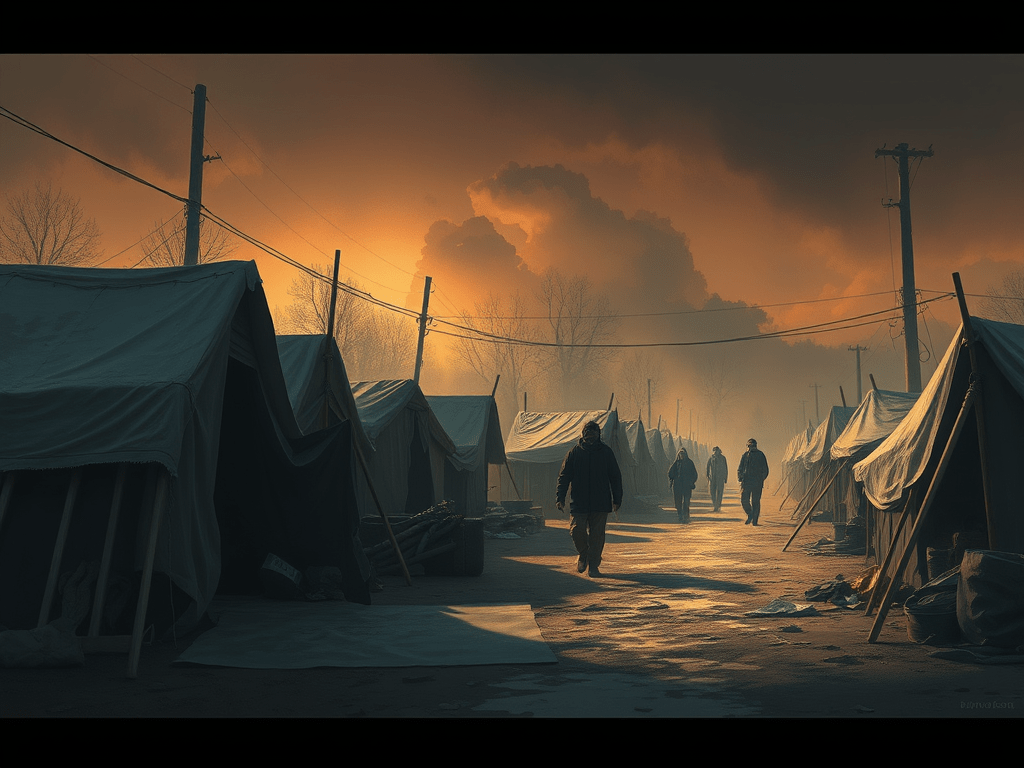
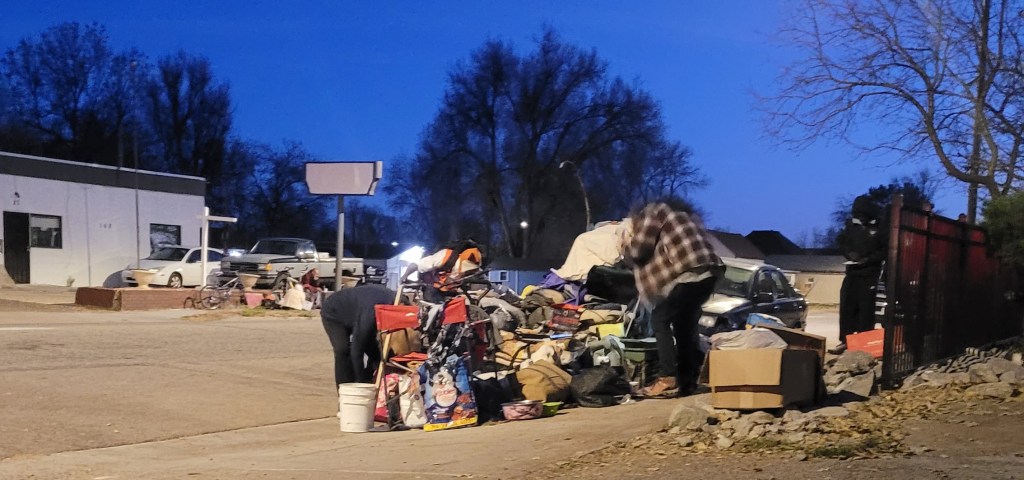
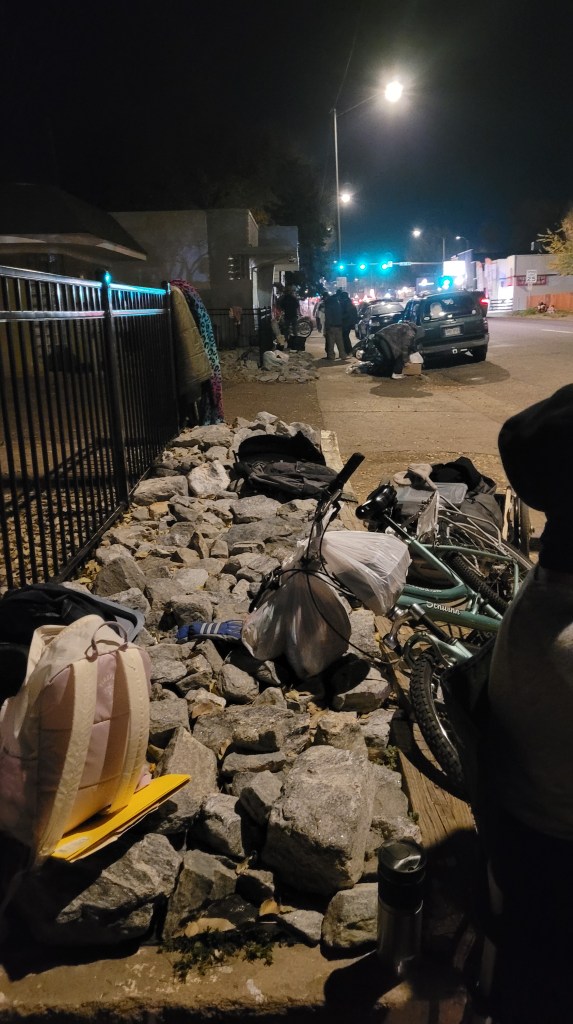
In short, we contracted with Homeward Alliance to coordinate the efforts of non-profits, faith based organizations, businesses, health care, behavioral health and government to address what is a community issue. Our progress was interrupted by COVID, and the entrenchment of homeless that occurred during that period surfaced as a major issue as encampments took over our river corridor and trail system in many areas. Council redirected the efforts of Homeward Alliance and increased the participation of the city (time and dollars) to eliminate the encampments.
As we eliminated the encampments we began to implements some of the strategies for managing homelessness – shelter, food, enrollment in database, connecting them with various organizations to address the individual needs of the person. Once again these are tactics.
One of Homeward Alliances deliverables is a true Strategic plan. That organization has received a grant to complete a strategic plan for Larimer County, Fort Collins and Loveland. While there will be individual plans, the approach will be regional in nature.
Homeward alliance is also beginning a process to form a Governing Board composed of organizations from many sectors – non-profit, faith based, business, government, health care, behavioral health, etc. The purpose is to involve the community to craft a community solutions to a community problem. Homelessness is not a government problem. It is not a police problem. It is a problem that affects the community as a whole and we as a community need to participate in its solution.
Admittedly this is a brief response to a lot that has transpired over the last four years, but hopefully you now have the background.
Steven D. Olson
Councilor, Ward III
Emails to or from City Council are subject to public disclosure under the Colorado Open Records Act (CORA), with limited exceptions. All emails addressed to or sent from City Council, including email addresses, will be visible in an online system in order to promote transparency, except those considered confidential under CORA. Emails with “#private#” in the subject line will appear in the online system, but the content and subject line will be restricted from view. However, the City of Loveland cannot guarantee that an email marked “#private#” will remain private under CORA
‘Emails to or from City Council are subject to public disclosure under the Colorado Open Records Act (CORA), with limited exceptions. All emails addressed to or sent from City Council, including email addresses, will be visible in an online system in order to promote transparency, except those considered confidential under CORA. Emails with “#private#” in the subject line will appear in the online system, but the content and subject line will be restricted from view. However, the City of Loveland cannot guarantee that an email marked “#private#” will remain private under CORA Emails to or from City Council are subject to public disclosure under the Colorado Open Records Act (CORA), with limited exceptions. All emails addressed to or sent from City Council, including email addresses, will be visible in an online system in order to promote transparency, except those considered confidential under CORA. Emails with “#private#” in the subject line will appear in the online system, but the content and subject line will be restricted from view. However, the City of Loveland cannot guarantee that an email marked “#private#” will remain private under CORA



















 Operation **Reclaim** Loveland
What do you think?