
Survivor Literacy – It Looks Different From Here
The world looks different from the vantage point of someone who’s lived through chronic unpredictability, emotional whiplash, or the quiet terror of someone else’s mood deciding the temperature of the day.
If you’ve ever had a dish angrily washed at you, you know what I mean. If you’ve ever had your world shattered by an offhanded phrase, you know what I mean. If you’ve ever measured your safety by the sound of footsteps, the slam of a door, or the tone of a sigh—you know what I mean.
This is not weakness. This is expertise.
Survivors develop a way of knowing that is precise, intuitive, and deeply embodied. We read micro‑expressions like weather patterns.
We sense tension before it’s spoken.
We anticipate danger before it arrives.
We adapt faster than most people realize is possible.
And yet, the world often calls this “overreacting.” It calls it “paranoia.” It calls it “being too sensitive.”
But what if we reframed it?
What if we recognized this for what it is: a highly trained survival intelligence. A nervous system that learned to detect threat because it had to.
A form of expertise that kept us alive.
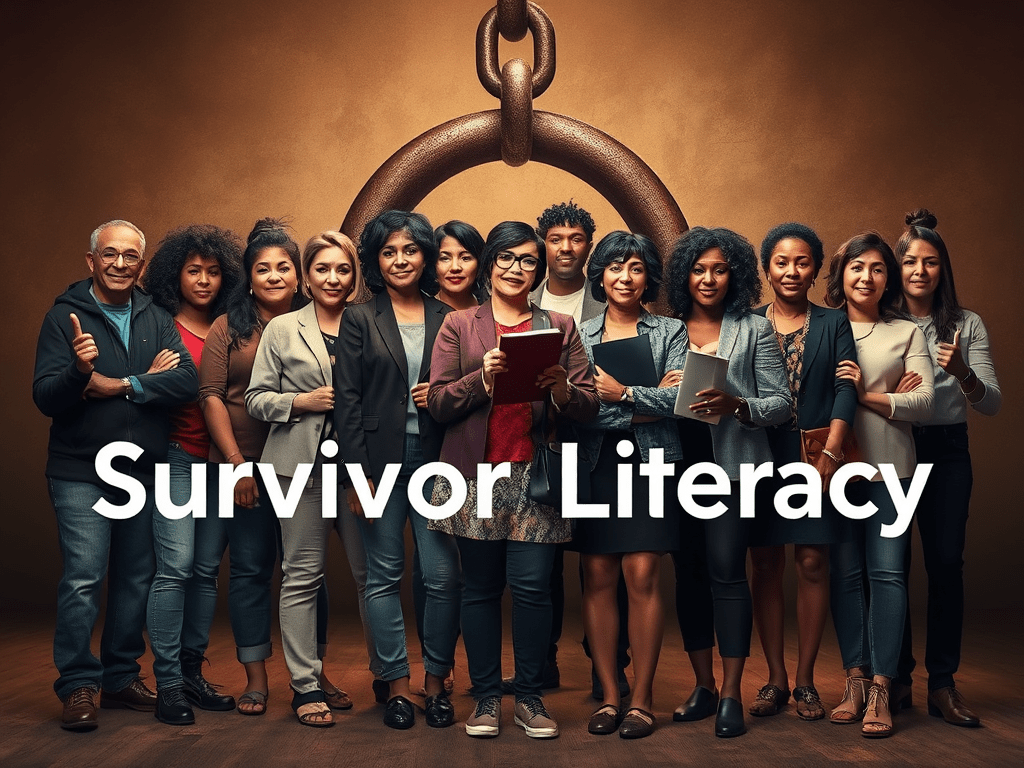
Survivor Literacy is about honoring that knowing instead of shaming it.
It’s about understanding that hypervigilance isn’t a flaw; it’s a story. A story about what we lived through, what we endured, and how brilliantly we adapted.
And as we heal, we don’t lose that expertise. We learn how to use it differently. We learn how to let it guide us without controlling us. We learn how to trust ourselves again.
Because the world really does look different from here. And that perspective is not a burden.
It’s a form of wisdom.















 Survivor Literacy
What do you think?