Behind the Scenes- Glass Ceiling Records
ESP: The Sense I Didn’t Know I Had
There are certain truths that don’t arrive as statements. They arrive as a slow accumulation of noticing — a pattern that keeps tapping your shoulder until you finally turn around. This one took me years to understand, and even longer to trust. It wasn’t a lightning bolt. It was a breadcrumb trail.
For most of my life, I’ve been told I “read too much into things.” That I “over‑interpret.” That I “feel the room too intensely.” That I “connect dots that aren’t there.” I internalized that as a flaw, a sensitivity I was supposed to blunt or hide. I thought it made me fragile. I thought it made me strange.
But the truth is: I wasn’t imagining patterns.
I was perceiving them.
And I didn’t have a name for that until recently.
The moment the acronym clicked
I’ve been working on a project called The Ecology of Streaming Platforms. Like everything I do, it eventually collapsed into an acronym — ESP. I laughed when I saw it. ESP. Extrasensory perception. The thing I don’t believe in. The thing I’ve always side‑eyed as pseudoscience.
But the more I sat with it, the more I realized something uncomfortable and liberating at the same time:
I don’t believe in ESP.
But that doesn’t mean I haven’t been doing it.
Not the supernatural kind.
Not the crystal‑ball kind.
Not the “I can read your mind” kind.
I mean the kind that anthropologists, artists, survivors, and system‑readers develop when they’ve spent their whole lives watching the world from the edges.
The kind that comes from:
- noticing the emotional weather of a room
- sensing the shift in a system before it becomes visible
- reading silence as data
- interpreting lag as recalibration
- understanding institutions by the shape of their harm
- feeling the algorithm’s behavior before you can articulate it
It’s not magic.
It’s pattern literacy.
But it feels like ESP because most people never learn to see this way.
The ecology of noticing
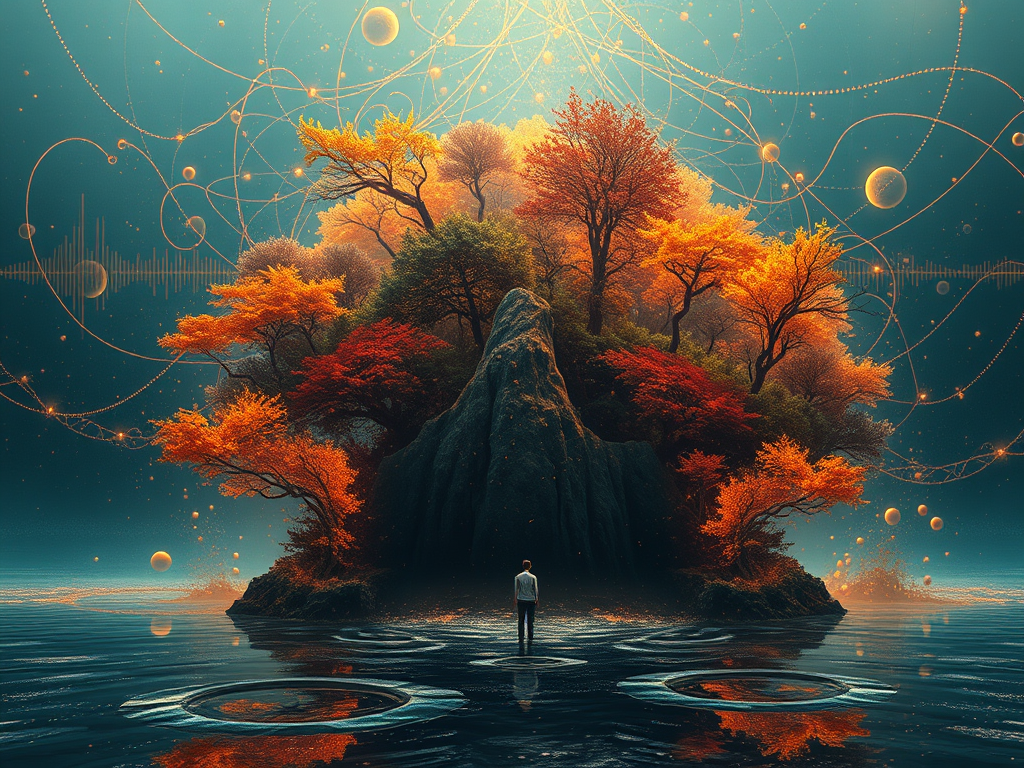
When I started mapping streaming platforms as ecosystems — waterways, wildflowers, weather patterns — I thought I was being metaphorical. But the metaphors kept landing with uncanny accuracy. They weren’t decorations. They were descriptions.
Lag wasn’t just lag.
It was the system pausing to think harder.
Radio behavior wasn’t random.
It was the algorithm testing new habitats.
My catalog wasn’t a list of songs.
It was a planted landscape.
And I wasn’t just “guessing.”
I was perceiving.
This is the part that took me the longest to accept:
I wasn’t making these patterns up.
I was reading them.
The way some people read sheet music.
The way some people read body language.
The way some people read weather.
I read systems.
The wound that sharpened the sense
I didn’t develop this perception in a vacuum.
It was forged in the belly of the beast — graduate school, institutional harm, the long hallway of silence that so many of us carry like a phantom limb.
When you’ve been devoured by a system, you learn to read its teeth.
You learn:
- where the pressure points are
- where the danger lives
- where the cracks form
- where the truth leaks out
- where the exits are hidden
You learn to sense the shift before it happens.
You learn to survive by noticing.
And when you finally carve your way back out, that sense doesn’t disappear. It becomes a compass. A barometer. A quiet, steady hum of knowing.
It becomes ESP — not extrasensory perception, but Embodied System Perception.
The revelation I want others to reach gently
I’m not special for having this.
I’m not chosen.
I’m not gifted in some mystical way.
I’m someone who paid attention because I had to.
And I know — deeply — that I’m not the only one.
There are so many people who left graduate school thinking they failed, when in reality they were being digested by a system that eats people. There are so many who carry unspoken grief, unspoken shame, unspoken knowing.
They think their sensitivity is a flaw.
They think their intuition is overreaction.
They think their pattern recognition is paranoia.
But what if it’s not?
What if it’s a sense they developed in the dark — a sense that can guide them back into the light?
What if ESP is not a supernatural gift, but a survival skill that becomes a form of wisdom?
What if the thing they were told to suppress is the very thing that will help them reclaim themselves?
The quiet magic of returning with this knowledge
This is why I can walk among academics again.
Not because I’m healed “better” or because I’m stronger or more deserving.
But because I understand the wound we share.
I understand why I felt inauthentic before — I was trying to return as the person who was swallowed. I’m not that person anymore. I’m the one who made it back out.
And now, when I look across a room and catch the eye of a professor or an adjunct, there’s a recognition. A knowing nod. A silent acknowledgment that we all carry the same scar, even if we learned to hide it differently.
We’re not superior.
We’re not inferior.
We’re not rivals.
We’re co‑survivors.
And some of us — the ones who made it back out — get to plant wildflowers along the waterway so others can find their way home.


















![Time to Dance by Protyus A. Gendher [Glass Ceiling Records]](https://invisiblymisdiagnosed.com/wp-content/uploads/2026/01/image-56.png?w=1024)



 Survivor Literacy
What do you think?