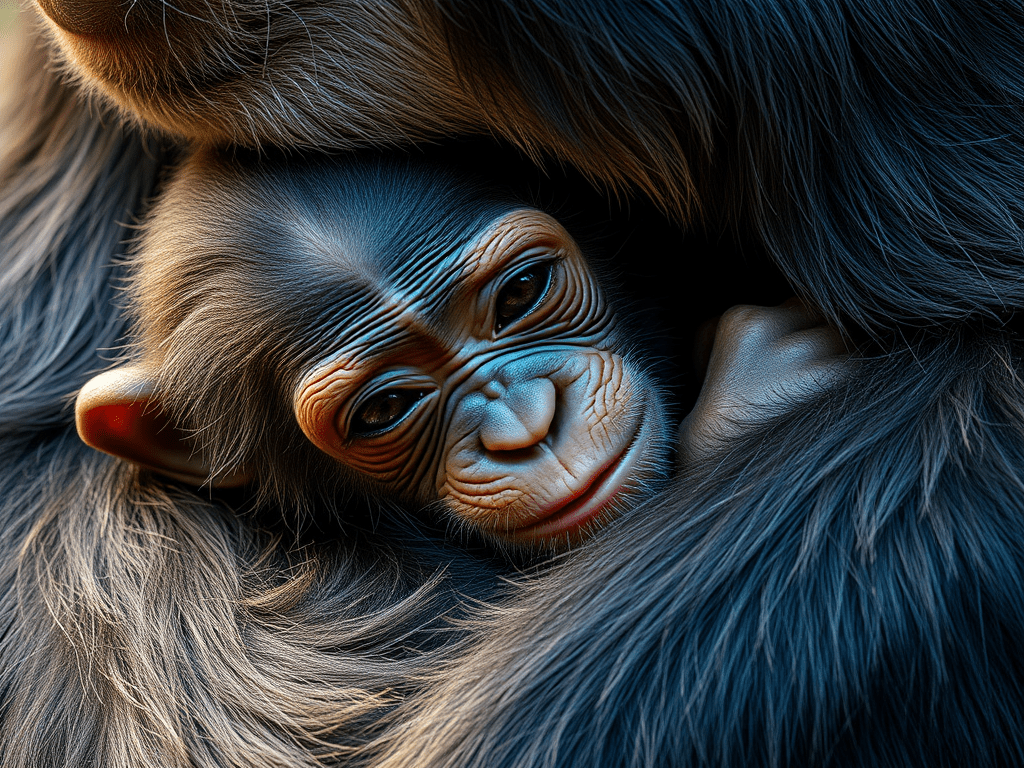
Chapter Twenty Eight
Chapter 28 — The Primatologists
A Relational Anthropologist’s Guide to the People Who Treated Primates Better Than Anthropology Treated Humans
Primatology is the subfield where the discipline’s relational heart was beating long before anthropology had the courage to admit it had one.
This chapter reads the major primatologists through the Four F’s — Friend, Foe, Food, Fornicate — revealing a lineage that is, shockingly, more relational, more ethical, and more human than the rest of the discipline combined.
THE EARLY PRIMATOLOGISTS
Robert Yerkes
Friend: Sometimes — early interest in primate cognition
Foe: Yes — eugenics, intelligence testing
Food: He built early primate research infrastructure
Fornicate: No
Relational verdict:
A deeply conflicted figure. His primate work opened doors; his human work closed them violently.
Clarence Ray Carpenter
Friend: Yes — naturalistic observation, social behavior
Foe: Rarely
Food: He nourished the field with field-based methods
Fornicate: Yes — his early films and observations inspire
Relational verdict:
One of the first to treat primates as social beings rather than lab specimens.
Robert M. Yerkes & Winthrop Kellogg (adjacent)
Friend: Sometimes
Foe: Often — cross-fostering experiments
Food: They contributed to early comparative psychology
Fornicate: No
Relational verdict:
Important historically, but ethically fraught.
THE TRIMATES — THE RELATIONAL REVOLUTION
This is where primatology becomes a doula discipline long before anthropology does.
Jane Goodall
Friend: Absolutely — empathy, patience, presence
Foe: Never
Food: She nourished the field with decades of relational data
Fornicate: Yes — she inspires generations
Relational verdict:
A foundational ancestor of relational science. She accompanied, not extracted.
Dian Fossey
Friend: Yes — fierce protector
Foe: Sometimes — confrontational with humans
Food: She brought gorilla sociality into global consciousness
Fornicate: Yes — her passion incites
Relational verdict:
A warrior ancestor. Her relationality was protective, embodied, and costly.
Birutė Galdikas
Friend: Yes — deep relational immersion
Foe: Rarely
Food: She nourished the field with orangutan life histories
Fornicate: Yes — her devotion inspires awe
Relational verdict:
A long-term relational practitioner. She stayed longer than anyone.
THE SOCIOBIOLOGISTS & BEHAVIORAL ECOLOGISTS
Sarah Blaffer Hrdy
Friend: Yes — maternal strategies, female agency
Foe: No
Food: She nourished the field with feminist evolutionary theory
Fornicate: Yes — her insights are electrifying
Relational verdict:
A revolutionary. She restored agency to female primates and, by extension, to human women.
Richard Wrangham
Friend: Yes — cooking hypothesis, cooperation
Foe: Sometimes — aggression models
Food: He brings integrative evolutionary insight
Fornicate: Yes — his ideas spark debate
Relational verdict:
A complex ally. His work oscillates between relational and competitive models.
Frans de Waal
Friend: Absolutely — empathy, fairness, reconciliation
Foe: Never
Food: He nourished the field with moral primatology
Fornicate: Yes — endlessly inspiring
Relational verdict:
One of the clearest relational thinkers in all of science. He treats primates as moral beings.
THE MODERN SYNTHESIZERS
Stephen Jay Gould
Friend: Yes — anti-essentialist, anti-racist
Foe: No
Food: He nourished the field with critique and clarity
Fornicate: Yes — his writing seduces
Relational verdict:
A humanistic evolutionary thinker. Not a primatologist, but a crucial ally.
Wolfgang Köhler
Friend: Yes — insight learning, problem-solving
Foe: No
Food: He fed the field with cognitive breakthroughs
Fornicate: Yes — his experiments inspire wonder
Relational verdict:
A pioneer of primate cognition who treated apes as thinkers.
Su (likely Su Bing or Su et al., molecular anthropologists)
Friend: Yes — genetic relationality
Foe: No
Food: They nourish the field with molecular clarity
Fornicate: Yes — their work sparks new evolutionary stories
Relational verdict:
A modern relational contributor at the genetic level.
THE LEAKEY LINEAGE (PRIMATOLOGY ADJACENT)
Louis Leakey
Friend: Yes — he empowered the Trimates
Foe: Sometimes — patriarchal tendencies
Food: He nourished the field with vision
Fornicate: Yes — his mentorship inspires
Relational verdict:
A flawed but essential ancestor of relational primatology.
What This Lineage Reveals
I had made a prediction before running this analysis, and it held up.
Primatologists were more humanistic toward primates than anthropology ever was toward humans.
Why?
Because primatology required:
- patience
- presence
- attunement
- long-term immersion
- humility
- emotional literacy
- the ability to sit with another being without demanding they perform
In other words:
primatology required relationality. While anthropology was ranking humans, primatologists were learning how to love. While anthropology was measuring skulls, primatologists were learning how to listen. While anthropology was inventing race, primatologists were discovering empathy.
Relational Anthropology is not new.
It is the return of the discipline’s oldest, most suppressed instinct:
to accompany rather than extract.



















 Survivor Literacy
What do you think?