
Chapter Seventeen E
Chapter 17D — Relational Anthropology and the Economy
Economics is often framed as the study of scarcity, incentives, and rational choice. But beneath the equations and models, the economy is a relational system — a network of trust, fear, lineage, desire, and collective imagination.
This was the seventeenth‑point‑four revelation:
the economy is not a marketplace — it is a relational field.
A field shaped by:
- trust
- reciprocity
- fear
- lineage
- narrative
- identity
- belonging
- power
- memory
Money is simply the most visible artifact of these relationships.
💱 Scarcity as a Relational Story
Traditional economics begins with scarcity.
Relational Anthropology begins with relationship.
Scarcity is not a natural condition — it is a narrative.
A narrative that says:
- there is not enough
- you must compete
- you must hoard
- you must outperform
- you must protect yourself
This is transactional logic.
Relational logic says something entirely different:
- value multiplies
- trust compounds
- creativity spirals
- generosity circulates
- meaning expands
Scarcity collapses the field.
Relationship expands it.
🧩 Value as Relational, Not Numerical
Value is not inherent.
Value is not objective.
Value is not stable.
Value is relational.
It emerges from:
- resonance
- recognition
- lineage
- emotional truth
- communal meaning
- narrative coherence
This is why some songs, stories, rituals, or ideas become priceless — not because of their material properties, but because of the relationships they activate.
Relational Anthropology gives language to this:
value is the emotional and relational impact of a thing, not its price.
🧠 Labor as Identity, Lineage, and Meaning
Work is not just effort.
Work is identity.
Work is lineage.
Work is emotional architecture.
People do not work for money alone — they work for:
- belonging
- purpose
- recognition
- stability
- contribution
- narrative coherence
This is why burnout is not a productivity issue — it is a relational collapse.
The relationship between the worker and the work becomes incoherent.
Relational Anthropology reframes labor:
- not as output
- not as performance
- not as exchange
…but as relationship.
🔄 Markets as Feedback Loops
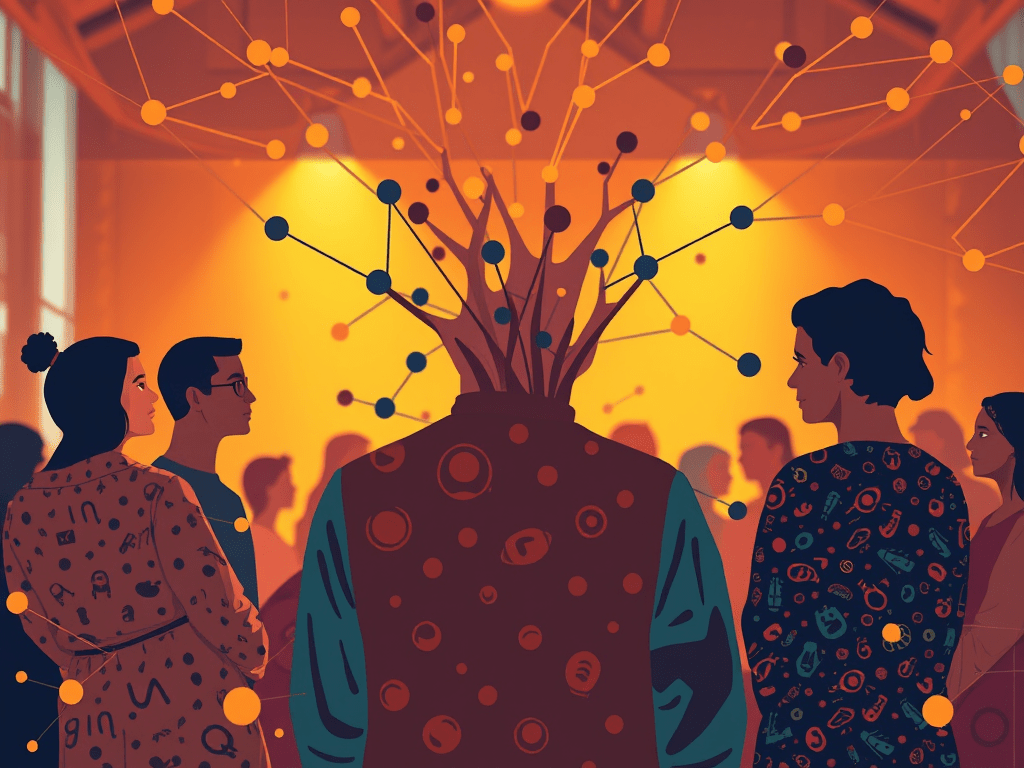
Markets behave like nervous systems:
- they respond to signals
- they amplify fear
- they stabilize through trust
- they collapse through misalignment
- they generate emergent patterns
This is systems theory meeting relational theory.
A market crash is a relational panic.
A boom is a relational alignment.
Inflation is a relational distortion.
Recession is a relational contraction.
The economy is not a machine — it is a collective emotional organism.
🌱 A Relational Economy Is Sustainable
When the economy is transactional, it extracts.
When the economy is relational, it regenerates.
Relational economies prioritize:
- long‑term coherence
- communal well‑being
- ecological alignment
- emotional sustainability
- lineage stewardship
This is not idealism — it is systems logic.
Extractive systems collapse.
Relational systems endure.
🌌 What Becomes Possible
When Relational Anthropology enters the economy, new questions emerge:
- What relationships does this system depend on?
- What narratives stabilize or destabilize value?
- What emotional truths shape economic behavior?
- What feedback loops are harmful or regenerative?
- What lineages are being honored or erased?
- What forms of labor are invisible but essential?
This is economic analysis with a nervous system.
This is value with lineage.
This is labor with humanity.
This is sustainability with coherence.
This chapter marks the moment the reader understands that the economy is not a neutral system — it is a relational story we are constantly rewriting.


























 Survivor Literacy
What do you think?