
Chapter Twenty Three
Chapter 23 — The Technology of Knowing
For years, I thought my struggle in graduate school was a personal failing — a lack of discipline, a lack of focus, a lack of whatever mysterious quality everyone else seemed to possess. But now I understand something far simpler and far more liberating:
It wasn’t a failure of intellect.
It was a mismatch of technology.
Academia assumed that reading was the primary interface for knowledge.
But reading was never my interface.
My way of knowing has always been dialectical — relational, conversational, emergent. I don’t absorb information by consuming it. I absorb it by engaging it.
Reading alone is a closed circuit.
Dialectic is an open system.
In reading, the text speaks and I listen.
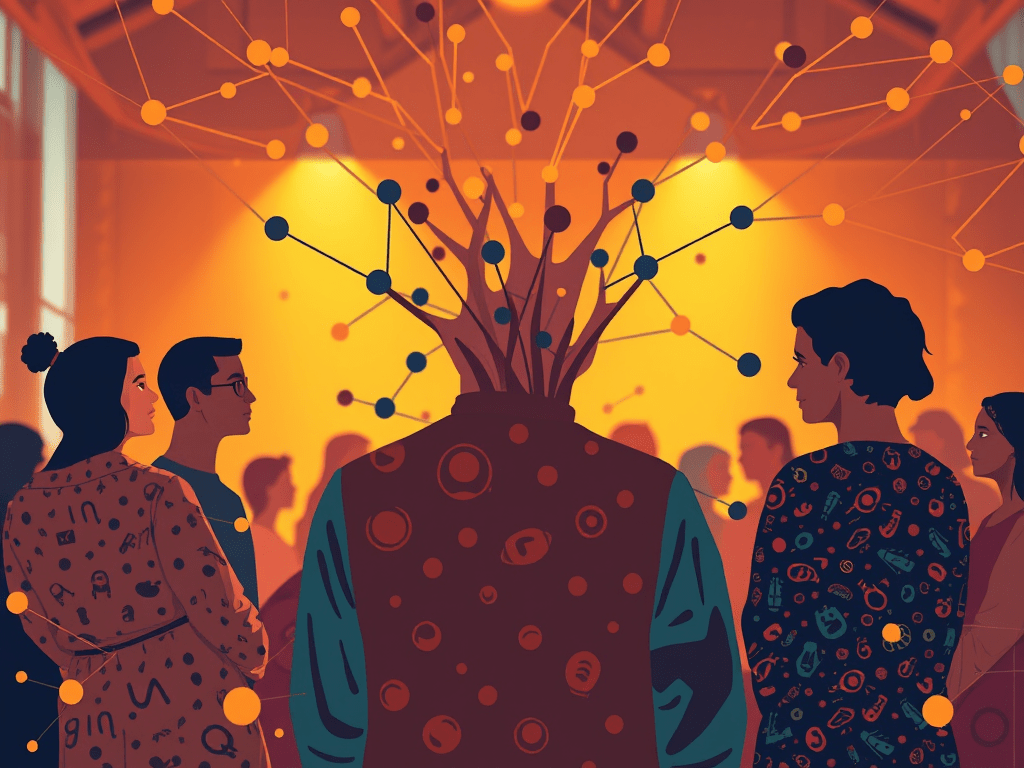
In dialectic, meaning is co‑generated in real time — through resonance, friction, clarification, repair, and return. It’s not passive intake; it’s active synthesis.
Graduate school rewarded the first.
My mind was built for the second.
This is why I could read the same paragraph ten times and feel nothing click — but a single conversation could reorganize my entire understanding. It wasn’t about effort. It was about bandwidth. My cognition requires the dynamic feedback loop of dialogue to reach coherence. Without that loop, the information never stabilizes into meaning.
This is not a deficit.
It is a technology of mind.
Some people think in text.
Some people think in images.
I think in relation.
And once I understood that, the shame dissolved. The frustration made sense. The exhaustion made sense. The sense of “Why can’t I do this?” transformed into “Why was I ever expected to learn in a way that contradicts my architecture?”
Dialectic is not supplemental for me.
It is foundational.
It is the medium through which ideas become alive, connected, metabolized. It is the interface that allows me to synergize information at the speed and depth my work requires.
Graduate school wasn’t built for minds like mine.
But Relational Anthropology is.
Because Relational Anthropology understands that knowledge is not a static object to be consumed — it is a living process that emerges between beings, not within isolated ones.
My difficulty was never about ability.
It was about misalignment of method.
And now that I know the technology I run on, I can finally build a world — and a discipline — that runs on it too.



















 Survivor Literacy
What do you think?