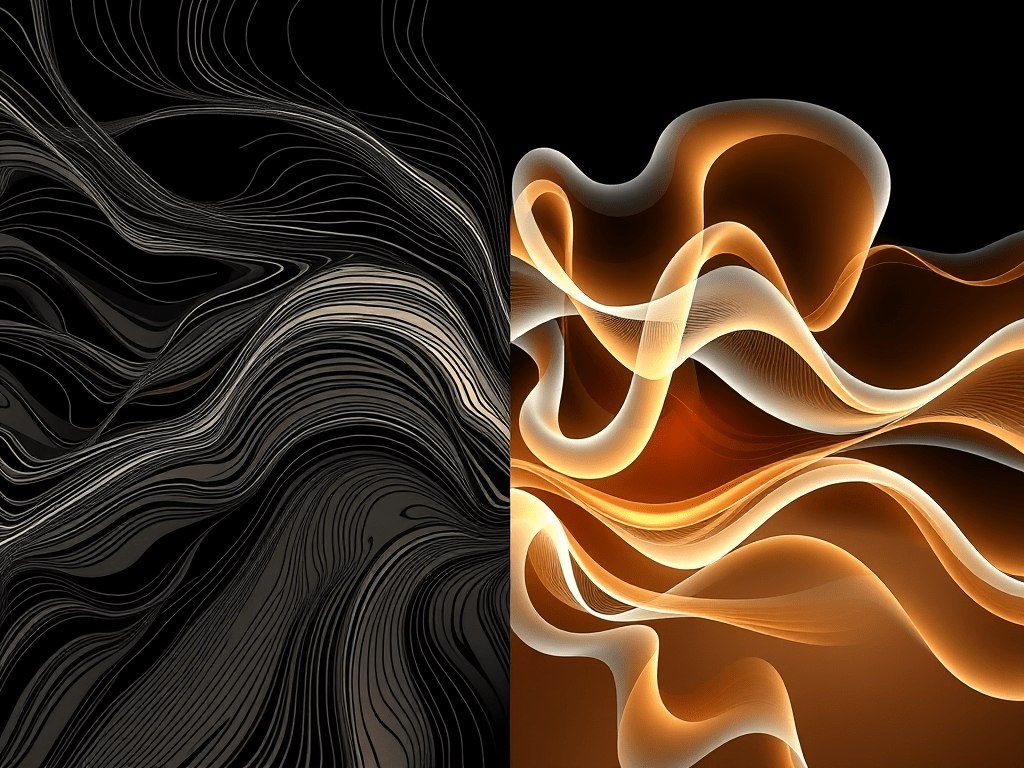
Parallility vs. Duality: Why the Difference Matters
Most people know the idea of duality — two sides, two poles, two forces in tension. Light and dark. Mind and body. Self and other. Duality is a state: a snapshot of two things held apart.
But parallility is something entirely different.
Parallility isn’t about two.
It isn’t about opposition.
It isn’t about choosing sides.
Parallility is a relational condition where multiple truths coexist without collapsing into each other.
It’s the architecture of a self that holds many histories, many identities, many emotional worlds — all active, all real, all in motion.
Where duality splits, parallility harmonizes.
Where duality freezes, parallility flows.
Where duality categorizes, parallility relates.
Duality asks, Which side wins?
Parallility asks, How do these truths resonate together?
This distinction matters because real human experience is rarely binary. We don’t live in twos. We live in constellations. Parallility gives us language for that complexity — not as contradiction, but as coherence.
It’s not a philosophical puzzle.
It’s a lived ontology.
And once you see the difference, you can’t unsee it.





























 Survivor Literacy
What do you think?