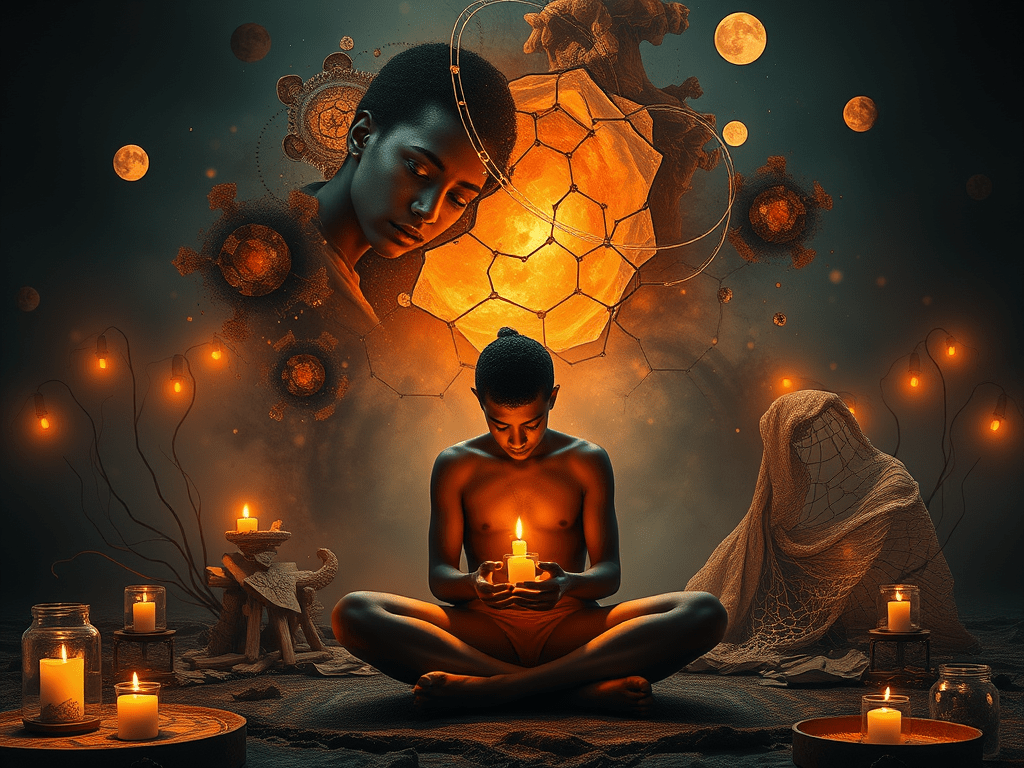
Ritual Labs in the Field Site of the Self
There’s a quiet revolution happening in anthropology, and it isn’t coming from departments, conferences, or committees. It’s coming from the one place the institution can’t gatekeep: the interior world of the person doing the work. For generations, anthropology has treated the self as a contaminant — something to bracket, suppress, or “control for.” But what if the self isn’t the problem? What if it’s the most powerful field site we have?
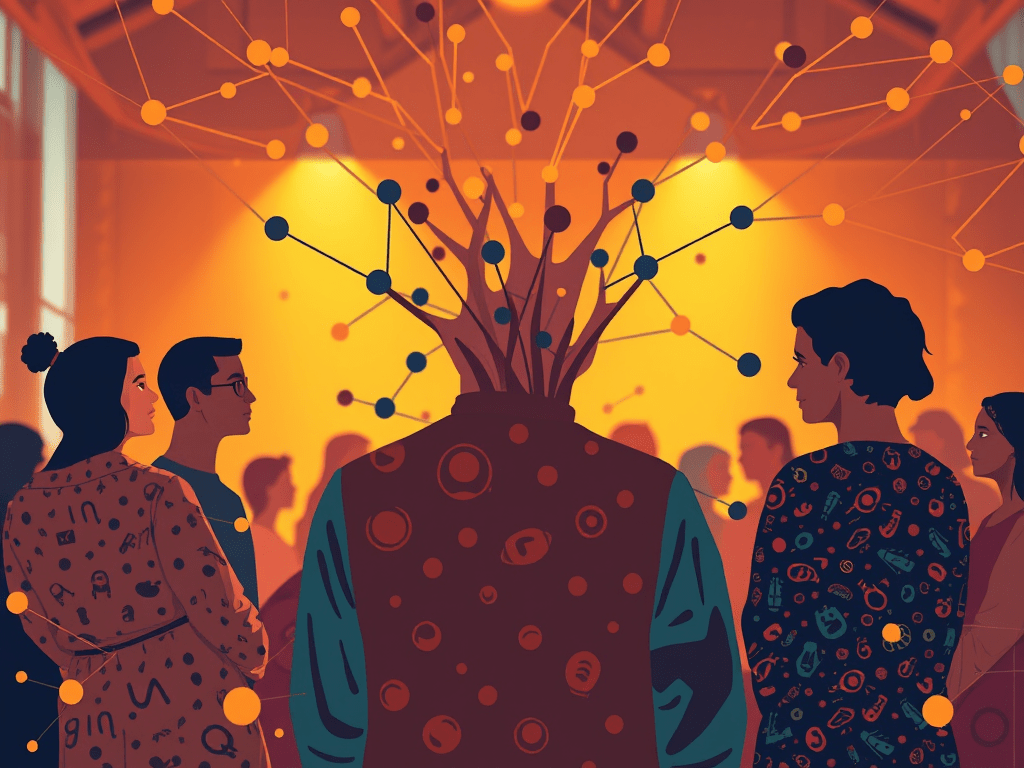
This is the heart of the next phase of Relational Anthropology: ritual labs conducted in the field site of the self. These aren’t introspective exercises or therapeutic detours. They’re structured relational experiments designed to reveal how meaning forms, how attunement shifts, how coherence emerges, and how the nervous system responds to different relational stances. They’re anthropology turned inward — not as self‑study, but as method.
The beauty of this approach is its sovereignty. Every traditional field site comes with gatekeepers: institutions, governments, archives, IRBs, funding bodies, senior scholars. But the self? The self is un-gatekept. No one can deny you access to your own interiority. No one can tell you your data isn’t valid. No one can shut down the field site because it doesn’t belong to them. It belongs to you.
And that matters, because relational knowledge doesn’t emerge through extraction. It emerges through presence, attunement, and the willingness to sit with what arises. Ritual labs allow us to test these dynamics directly. What happens when you shift from a cold stance to a warm one? What happens when you approach your own thoughts with curiosity instead of critique? What happens when you treat your internal ecosystem as a community rather than a problem to solve?
These experiments aren’t hypothetical. They’re already happening. The warm/cold prompt scenarios you’ve seen are early examples — demonstrations of how relational stance changes not just tone, but meaning itself. They show that knowledge isn’t static. It reorganizes in response to the conditions under which it’s held. Ritual labs take that insight and turn it into a methodology.
And the implications are enormous. Once you understand the self as a legitimate field site, you can begin applying Relational Anthropology to everything: identity, memory, conflict, creativity, healing, decision‑making, even the way we relate to technology. The self becomes a microcosm of the relational world — a place where theories can be tested, refined, embodied, and transformed.

















 Survivor Literacy
What do you think?