parallility
-
Parallility vs. Duality: Why the Difference Matters

Parallility vs. Duality: Why the Difference Matters Most people know the idea of duality — two sides, two poles, two forces in tension. Light and dark. Mind and body. Self and other. Duality is a state: a snapshot of two things held apart. But parallility is something entirely different. Parallility isn’t about two.It isn’t about Continue reading
Recent Posts
- 85) Ice
 After a difficult season, the narrator takes a night job as a laundress at a care facility, driving an unreliable old car. Struggling with harsh winter conditions, she navigates challenges both at work and on the road. Personal struggles intertwine with moments of connection, leading to a poignant reflection on dependence and vulnerability.
 - Relational Psychology – Self as Disease to Self as Medicine
 A shift is emerging in psychology, moving from viewing the self as flawed to recognizing it as a healing entity. This new perspective reframes symptoms as adaptations and emphasizes relational healing. By asking different questions focused on understanding rather than diagnosing, we can better comprehend the complexities of human experience.
 - Relational Anthropology – Relational Psychology?
 The emergence of Relational Anthropology showcases how rigor can develop organically rather than through external pressures. This discipline prioritizes listening and relational knowledge, allowing ideas to find their own structure. The process is depicted as an ecological evolution, emphasizing clarity and coherence through presence rather than perfection, fostering an innovative and flexible academic environment.
 - Relational Anthropology – Rigor
 The manuscript development process organically revealed a nuanced system of rigor, transforming traditional workflows into a spiral approach that accommodates clarifications without disrupting flow. This led to the creation of “theory scouts,” blog posts that enhance understanding and expand concepts, resulting in a fluid, cohesive manuscript that nurtures relational integrity.
 - Parallility vs. Duality: Why the Difference Matters
 Parallility vs. Duality: Why the Difference Matters Most people know the idea of duality — two sides, two poles, two… Read more: Parallility vs. Duality: Why the Difference Matters
 - Relational Anthropology – Ritual Lab
 The emerging phase of Relational Anthropology focuses on “ritual labs” within the self as a primary field site, challenging traditional practices that suppress personal experience. This approach allows anthropologists to explore relational dynamics through personal experiments, emphasizing the self’s sovereignty and transforming how knowledge is constructed and understood in various contexts.
 - 23) Conformity Part Two
 The Stanford Prison Experiment, conducted by Philip Zimbardo in 1971, showcased the impact of perceived authority on human behavior in a simulated prison environment. Initially planned for two weeks, it ended after six days due to distress among participants, revealing how power and helplessness can drastically alter individuals’ actions and psyche.
 - The Myth of the Perfect Prompt (And the Truth You Already Know)
 The myth that crafting the perfect prompt is essential for effective AI interaction overlooks a deeper truth: meaning arises from relationality, not precision. Engaging with AI through curiosity and connection yields richer, more resonant outcomes. This principle applies beyond AI, emphasizing the importance of relationship in learning, creating, and healing.
 - 54) Human Trafficking Part Four
 The content discusses the pervasive issue of human trafficking within various societal systems in America, such as adoption, surrogacy, and the military. It highlights personal experiences and the detrimental effects on individuals and communities, urging readers to recognize these connections to promote healing and potential escape from these cycles of exploitation.
 - AIQ- Lynching – A History
 A History of Lynching in the United States
 - Relational Anthropology – Survivor Literacy
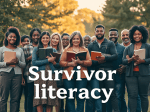 Survivor Literacy is an innate understanding developed through hardship, representing unspoken knowledge gained from trauma and resilience. It encompasses various forms of literacy, including endurance, care, and witnessing, emphasizing the importance of community. It reflects how survival informs wisdom, healing, and connection, ultimately fostering a collective ethos of support and remembrance.
 - 22) Mom
 The narrative recounts the author’s complicated relationship with their mother following their father’s suicide. It depicts their mother’s struggles while raising her children amid grief, her strong personality, unique habits, and joys, such as cooking and gardening. Over time, her bitterness and distance grew, reflecting deep emotional turmoil.
 - Relational Anthropology – The Relational Lineage of Ethnic, Black, Indigenous, and Diaspora Thought
 Chapter Thirty One highlights the critical contributions of Black, Indigenous, Chicano, feminist, queer, and diaspora thinkers to Relational Anthropology. These intellectuals reveal essential insights on power, identity, and survival, challenging traditional narratives and offering a foundation for survivor literacy. Their ideas shape our understanding of relational ethics and community resilience.
 - Relational Anthropology – Feminist, Queer, and Postcolonial Theory
 Chapter Thirty emphasizes the influential thinkers in feminist, queer, and postcolonial theory who revitalized anthropology by restoring agency, embodiment, voice, and relational dynamics often overlooked in the discipline. It portrays these scholars as foundational figures who not only critiqued but also reconstructed anthropology’s moral architecture, creating a comprehensive relational lineage.
 - 84) Matthew
 The post reflects on the impact of Matthew Shepard’s murder on the author, who feels deeply connected to their identity as a bisexual witch in Wyoming. It highlights the pervasive bigotry encountered, despite some community members claiming to support “live and let live.” The author expresses determination to fight for equality and honor Matthew’s legacy, feeling an obligation to remain visible and vocal against hatred.
Newsletter
One-Time
Monthly
Make a one-time donation
Make a monthly donation
Choose an amount
$5.00
$15.00
$100.00
$5.00
$15.00
$100.00
Or enter a custom amount
$
Your contribution is appreciated.
Your contribution is appreciated.
DonateDonate monthly Survivor Literacy