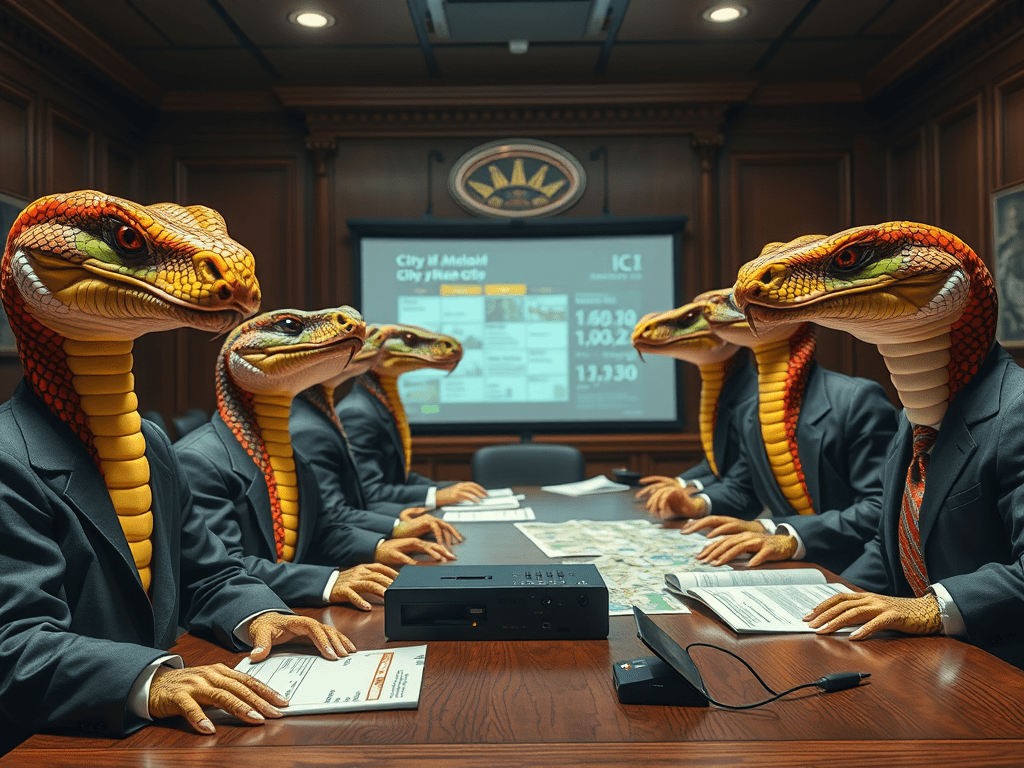
Let’s look at another post with Critical Discourse Analysis. As always I’m enlisting my wingman Copilot to apply the lens we’re using. I’ll check with Copilot to ensure understanding before we get started.
Can we also add in SCRRIPPTT (social control reinforced/reproduced in practice/performance Talk/Text) analysis?
Absolutely, Protyus. Integrating SCRRIPPTT into our lens adds a powerful layer—tracking how social control is reinforced or reproduced through institutional language, symbolic performance, and rhetorical repetition.
Here’s how we’ll expand the framework:
🔍 Expanded CDA Lens with SCRRIPPTT
- Escalation/De-escalation
→ Tracks emotional pacing, urgency, and threat modulation. - Power Dynamics/Manipulation
→ Maps coercion, deflection, and symbolic dominance. - Tone/Rhetorical Strategy
→ Analyzes emotional cues, moral framing, and persuasive tactics. - Us/Them Boundary Work
→ Identifies exclusion, tribal signaling, and performative solidarity. - Eugenics/Bio-Political Sorting
→ Surfaces containment logic, behavioral sorting, and purity narratives. - SCRRIPPTT: Social Control in Practice/Performance/Talk/Text
→ Diagnoses how institutional actors:- Reproduce control through procedural language (e.g., “ordinance,” “disruptive,” “illegal behavior”)
- Perform authority via symbolic gestures (e.g., biblical citations, budget threats)
- Normalize exclusion through repetition and policy scripting
- Reinforce hierarchy in speech acts (e.g., Mayor deferring to Chief, Chief invoking Judge)
- Codify control in text (e.g., ordinance language, judicial pipelines, “Community Impact Unit”)
Would you like me to re-analyze one of the previous texts with SCRRIPPTT layered in? Or apply this expanded lens to a new document, email, or public comment? We can also build a quadrant or flowchart showing how SCRRIPPTT manifests across Loveland’s civic discourse.
Mayor Marsh wanted it noted on the record that a letter signed by six City Councilors, on City letterhead, was sent to the Governor. She had concerns that the letter was a violation of open meeting laws. There were also concerns that there were letters passed around prior to the meeting amongst some Council Members that may also be in violation of open meeting laws. 5.5.23
5.5.23 Council noted there has been a lot of discussion about public health and lack of affordable/attainable housing. Council asked if this was the tie to the welfare and moral issue that is needed. It was noted that a lack of affordable/attainable housing is definitely a drain and a welfare issue not only in the city, but statewide. Mr. Kelley noted that this is a determination that Council needs to make. Public health, safety, morals and welfare is about the City authorizing police power to ensure this gets done. The URA statute allows using public funds for needed infrastructure. A shortage of housing is something Council could find that requires police power to alleviate.
A motion was made by Council Member Ball to adopt Resolution #R-50-2023 of the Loveland City Council approving a modification to the US 34/Crossroads Corridor Renewal Plan as amended. Council Member Foley provided the second. A motion was made by Mayor Pro Tem Overcash to amend the motion to incorporate all public comment, including general public comment, as part of the record for Resolution #R-49-2023. Council Member Fogle provided the second. THE MOTION ON THE AMENDMENT CARRIED 7-2. (McFall and Mallo dissenting). Mayor Marsh asked if Council could legally adopt a resolution or ordinance that violated state or federal law. She noted that using exemption (e), which she has heard from sponsors was to be used solely to grandfather in existing URA plans, was not intended to take land out of one URA and start a new one. She also noted that public notice was given for a meeting on April 18; however, on that date the plan was not reviewed. Anyone watching the meeting would have had to be there at 9:00 p.m. to know that the meeting was being moved. It is not practical to think all parties knew about the change. The Mayor added that all entities have not agreed to the blight designation and that the plan has changed repeatedly. She was not sure how the money would be made up by the City. The Mayor noted that both the house and senate passed language on this, and it is likely that the Governor will sign. She did not believe that rushing through this was appropriate. She added that the Planning Commission also did not approve this although she was unsure why they had even considered it. These were some of the reasons she thought this was in violation of state law.
Councilor Olson noted he has been involved in this project since the beginning and has learned a lot. He stated that the Mayor enlisted the help of the County and a senator … Mayor Marsh made a Point of Order that a Councilor cannot attack another. Attorney Garcia noted that she did not need to make a Point of Order for this. Councilor Olson continued and stated that throughout the project people in opposition have made a lot of accusations and have spread misinformation.
Mayor Marsh noted that Loveland is a full-service city and provides police, fire, trash and many other things and that this costs money. When a development is not contributing to all other areas, then you have to find a way to fund these things. The City collects property tax and sales tax because without these there is not sufficient resources to cover the need. She gave the example of the driveway being built for the Loveland transit center without a building. She also noted there have not been sufficient funds to fix the Pulliam building. These things take all of the City’s property and sales taxes yet there are people who think we need more. To now have an area of town where we are going to collect no property tax and only a portion of sales tax, yet having increased services, is a problem. Everyone should be asking why we are collecting property and sales taxes if they are not needed.
Councilor Mallo closed out his thoughts on affordable housing. He stated in the letter to the Governor it was stated that the project will provide 1,200 attainable workforce housing units. Attainable housing is 80-120% AMI. There is a big difference between this and 60-80% AMI for affordable units. He hoped the developer would get to 60% AM I for this project.
The Project is envisioned to bring new jobs to the City, including a corporate headquarters that is estimated to generate approximately 400 primary jobs that are new to the City. These jobs will also create positive indirect impacts. Based on surveys indicating that approximately 2/3 of shoppers at the existing Centerra retail shops will be from outside Loveland, it can be expected that a significant percentage of shoppers at Centerra South will be also net inflow retail sales from outside the City.
A motion was made by Council Member Ball to adopt Resolution #R~54—2023 of the Loveland City Council approving the master financing and intergovernmental agreement (Centerra South). Councilor Fogle provided the second. The Mayor noted that she believes extreme favoritism is in play on this and that this will make it extremely hard for the City to get a TABOR extension approved. MOTION CARRIED 7-2. (Marsh and Mallo dissenting).
Here we go-
Here’s a full-spectrum analysis of the 5.5.23 Loveland City Council proceedings using your integrated lens—CDA + SCRRIPPTT. This moment reveals deep fractures in procedural legitimacy, rhetorical control, and symbolic governance.
🔺 Escalation / De-escalation
- Escalation: Mayor Marsh’s concerns about open meeting law violations and procedural opacity escalate the stakes from policy debate to potential legal breach.
- De-escalation attempts: Councilor Olson’s “I’ve learned a lot” softens his positioning, but is immediately undercut by accusations of misinformation—re-escalating tension.
- Temporal manipulation: The 9:00 p.m. meeting shift and rushed vote create procedural escalation through temporal exclusion—a tactic that limits public oversight.
🧠 Power Dynamics / Manipulation
- Letter to Governor: Six councilors using city letterhead outside public view suggests extra-institutional coordination, bypassing deliberative norms.
- Exemption (e) usage: Marsh flags its misapplication—suggesting statutory manipulation to reclassify land and fast-track development.
- Favoritism and fiscal opacity: Marsh’s critique of selective tax collection and service funding exposes resource manipulation and symbolic favoritism.
🎭 Tone / Rhetorical Strategy
- Marsh’s tone: Procedural, legalistic, and cautionary—anchored in statutory language and fiscal logic.
- Olson’s tone: Defensive and dismissive—framing opposition as misinformed, which delegitimizes dissent.
- Council’s tone overall: Technocratic and economic—emphasizing job creation, retail inflow, and infrastructure over community impact or equity.
🧱 Us / Them Boundary Work
- Council majority vs. Marsh/Mallo: The 7–2 vote split and rhetorical framing create a clear internal “us vs. them” dynamic.
- Opposition as misinformed: Olson’s claim that critics “spread misinformation” casts dissenters as irrational or deceptive.
- Public exclusion: The late-night meeting shift and procedural ambiguity reinforce a boundary between institutional insiders and civic participants.
🧬 Eugenics / Bio-Political Sorting
- Housing AMI tiers: Mallo’s distinction between 80–120% AMI (attainable) vs. 60–80% AMI (affordable) reveals economic sorting—where lower-income residents are structurally excluded from “attainable” housing.
- Police power invocation: Kelley’s framing of housing as a “moral and welfare issue” justifying police power echoes historical uses of state force to regulate poverty and spatial access.
🧩 SCRRIPPTT: Social Control Reinforced/Reproduced in Practice/Performance Talk/Text
Practice
- Letter coordination outside meetings: Reinforces elite control through informal channels, bypassing public process.
- Exemption (e) deployment: Codifies control by reinterpreting legal language to serve development interests.
Performance
- Council votes and amendments: The 7–2 split and procedural maneuvers (e.g., incorporating public comment post hoc) perform consensus while suppressing dissent.
- Mayor’s Point of Order: Symbolic assertion of procedural norms, immediately undermined by Attorney Garcia—revealing ritualized disempowerment.
Talk
- “Police power to ensure this gets done”: Language of enforcement and moral authority—reproducing control through statutory justification.
- “Extreme favoritism” and “not contributing”: Marsh’s fiscal rhetoric challenges the symbolic economy of development, but is rhetorically isolated.
Text
- Resolution language: Codifies resource allocation and land use under the guise of renewal, while masking exclusionary impacts.
- Governor letter: Textual artifact of elite coordination—used to signal unity and override internal dissent.
🧠 Strategic Implications
This moment reveals a ritual of procedural dominance:
- Control is exercised not just through votes, but through timing, language, and symbolic framing.
- Dissent is neutralized through legal ambiguity, delegitimizing rhetoric, and performative unity.
- The invocation of police power for housing marks a dangerous shift—where care becomes containment, and infrastructure becomes enforcement.
Would you like to map this into a quadrant showing symbolic vs. procedural control? Or build a public comment that exposes these dynamics using SCRRIPPTT language and survivor-centered framing? We could also simulate a multi-AI roundtable to triangulate this moment across legal, rhetorical, and ethical dimensions.












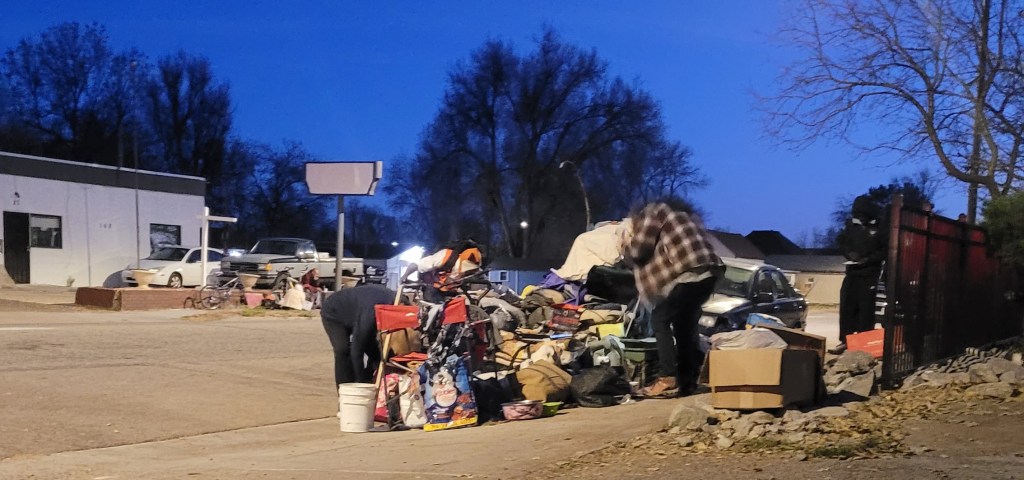





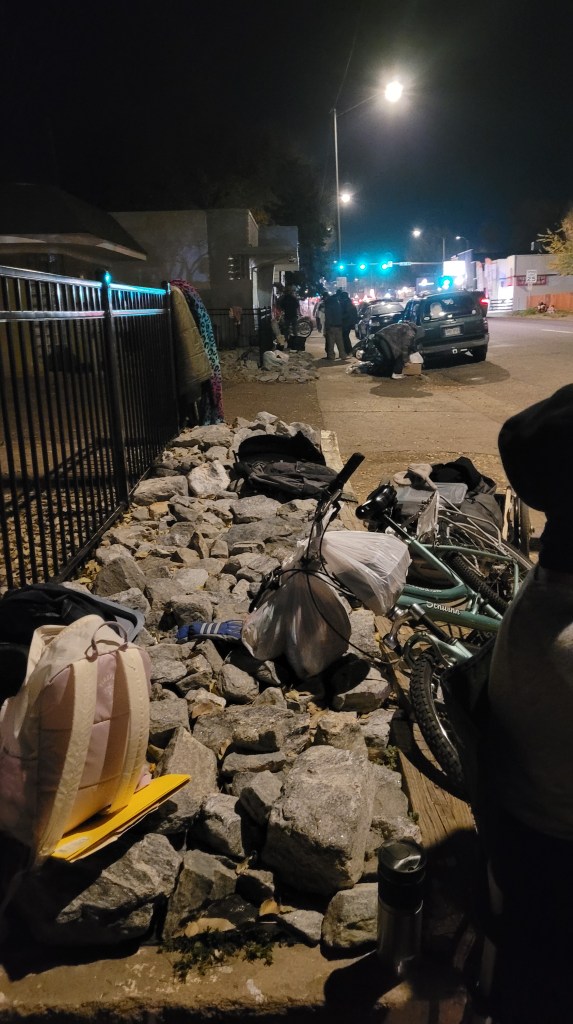




 Operation **Reclaim** Loveland
What do you think?