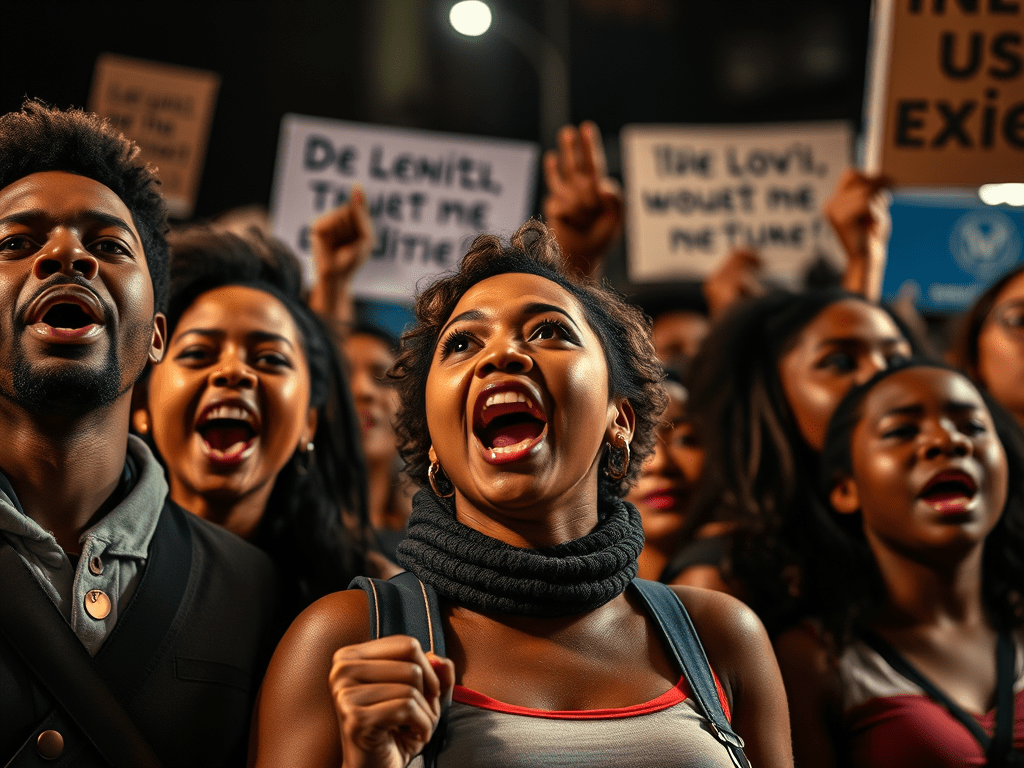
Raise Your Voice – Just Not Like That
As an activist there are some things you can ALWAYS count on.
I invite you to present exceptions to the following.
- Even though the work is the same somehow using the word “activist” will start a fight, whereas “advocates” will occasionally be heard.
- There will always be too much to still get done.
- The privileged and powerful will never willingly concede either, and thus pressure is necessary.
- The closer you get to challenging the status quo, the more viscious the personal attacks from the other side.
- No matter how you apply this pressure, there will be a loud public decry that you are doing it wrong BECAUSE the pressure you’ve applied is becoming uncomfortable for those who benefit from the status quo.
1) Even though the work is the same somehow using the word “activist” will start a fight, whereas “advocates” will occasionally be heard.
It’s not only and always these two words, but it is always like this.
During the American Revolution, people called “patriots” defending American sovereignty were branded “rebels” and “radicals” by those they wished to overthrow. Simultaneously, framing as the “founding fathers” provokes a seminal benevolence protecting them from both those they sought to gain power from (the English) and those they were consuming. For these populations they used terms like “chattel,” “assets,” “holdings,” “stock,” “indentures,” “heathens,” “primitives,” “savages,” “subjects,” and other terms I will not use.
As time progressed we see this continue into activists like Martin Luther King Jr. aligning with labels like “reverend” or “advocate” rather than activist, while the US government called those working with Malcolm X as “agitators” and “radicals.” In practice, the government largely ignored and deflected the efforts of both, but glorified “peaceful protest” AFTER Martin Luther King Jr. died to set a social standard that they only acceptable way to seek change is through the public acceptance of neverending human abuse.
Activism has always and will always be necessary to challenge power, and it will always be resisted by the powerful in any way possible. This also means that you can tell who has the power and who is disposable by how this language is used.
2. There Will Always Be Too Much Left to Do
Tiananmen Square (1989): Students demanded democracy, freedom of speech, and an end to corruption. Even after weeks of protest, their agenda remained unfinished, cut short by violent repression.
Capitol Crawl (1990): More than 1000 activists marched from the White House to the Capitol where roughly 60 demonstrators (also activists) with disabilities scaled the steps of the Capitol. A few months later the Americans with Disabilities Act was passed. Despite the change in legislation these battles still have to be fought one violation at a time in the expensive and exhausting legal system, and impossibility for those who already cannot meet their own needs.
Treaties 1778-1871: Of the roughly 370 treaties the US signed with Native nations none were honored in their original terms. Each agreement resulted from fervent activism, and they did not produce the actual rights, just an agreement.
I’m going to use an example that hits home for me, that I was reminded of by a dear friend recently. Originally, in 1863, the Wind River Reservation had 44 million acres, which is absolutely absurd for housing a people who were previously limitless. By 1868, Wind River was already reduced to less than 3 million acres. That’s only 5 years. Today they only have 2.2 million acres, and the Bureau of Reclamation is currently working on stealing another 60,000 acres.
Civil Rights Era: Even after landmark legislation (Civil Rights Act, Voting Rights Act), systemic inequality persisted, showing that victories rarely complete the work. In many jurisdictions, people of color were beaten and killled for exercising the rights they’d been granted.
Emancipation Proclamation (1863): Despite federal declaration that people enslaved by savage Whites in the Confederacy were forever free, it didn’t apply to slave owners in Union states. Juneteenth (June 19, 1865) is a bold reminder that the law has no power when it’s not enforced. It took 2 years before word of emancipation reached Galveston, Texas, and even then had to be enforced by Union troops.
Repeatedly, this shows that even political victories advocating for the oppressed don’t usually result in the actual change. Practices continue, and the language of change is adopted as gaslighting.
3. The Powerful Rarely Concede Without Pressure
After the Boston Tea Party, Britain responded with the Coercive Acts, doubling down rather than conceding, which escalated the conflict into revolution.
I watched the “Special Report” nonstop during Tiennamen Square, and was horrified after the Chinese people showed up so beautifully to ask for change and thegovernment refused reforms, instead deploying military force. I remember watching the tanks, and in my naievety thinking how grateful I was that this could’t happen here.
There are a few noteworthy exceptions. Some environmental campaigns (e.g., ozone protection via the Montreal Protocol) saw governments concede relatively quickly—but only under massive scientific and diplomatic pressure.
That being said…
- American Revolution (1775–1783): Colonists used armed rebellion to secure independence from Britain.
- Abolition of Slavery (1861–1865): The Civil War was fought to end slavery, after decades of failed compromise.
- Labor Rights (late 19th–early 20th century): Strikes like the Pullman Strike (1894) and violent clashes (e.g., Ludlow Massacre, 1914) forced recognition of workers’ rights.
- Women’s Suffrage (early 20th century): Suffragists endured arrests, hunger strikes, and force-feeding before the 19th Amendment passed in 1920.
- Civil Rights Movement (1950s–1960s): Sit-ins, marches, and confrontations with police (Selma, Birmingham) forced federal action.
- Stonewall Uprising (1969): LGBTQ+ patrons resisted police raids, sparking the modern gay rights movement.
- Disability Rights (1990): The Capitol Crawl dramatized exclusion, forcing Congress to pass the ADA.
- Standing Rock (2016–2017): Native activists resisted the Dakota Access Pipeline, using direct action to spotlight environmental justice.
- French Revolution (1789–1799): Overthrew monarchy and feudal privilege through mass uprising.
- Haitian Revolution (1791–1804): Enslaved Africans fought for and won independence, ending slavery in Haiti.
- Indian Independence (1947): Gandhi’s nonviolent resistance was paired with mass strikes and uprisings that forced Britain to leave.
- Anti-Apartheid Movement (1948–1994): Protests, boycotts, and armed resistance pressured South Africa to dismantle apartheid.
- Tiananmen Square (1989): Students demanded democracy; though crushed, the protest remains a symbol of resistance.
- Arab Spring (2010–2012): Mass uprisings toppled governments in Tunisia, Egypt, Libya, and beyond.
- Women’s Rights in Iran (ongoing): Protests against compulsory hijab laws and gender inequality continue despite violent crackdowns.
- Eastern European Revolutions (1989): Mass protests and uprisings brought down communist regimes across the region.
- Black Lives Matter (global, 2013–present): Protests against police brutality spread internationally, forcing policy debates and reforms.
Pressure is necessary: The powerful rarely concede without disruption.
Backlash is inevitable: Protesters are vilified, criminalized, or attacked.
Force takes many forms: Armed rebellion, civil disobedience, strikes, uprisings, or symbolic disruption.
Victories are partial: Even after “success,” systemic resistance continues (e.g., post-emancipation Black Codes, post-ADA accessibility gaps).
Ergo, the work is never done.
4. Closer to the Status Quo → More Vicious Attacks
Malcolm X vs. MLK: King was vilified during his lifetime (called a communist, agitator, and threat to order). Only after his assassination was he sanitized into a symbol of peaceful change, while Malcolm X remained demonized. This juxtaposition enabled a public embrace of the use of force in disdain against any forms other than peaceful sit ins and marches, despite the fact that the Black Panthers were busy founding WIC and things like it.
Colin Kaepernick (2016–present): Kneeling during the anthem provoked intense backlash—he was accused of being unpatriotic, blacklisted from the NFL, and subjected to personal attacks, despite the peaceful nature of his protest.
5. Public Decry: “You’re Doing It Wrong”
- Boston Tea Party: Critics in Britain and even some colonists condemned the destruction of property as reckless, despite its symbolic power.
- Tiananmen Square: The Chinese government framed protesters as “counterrevolutionaries,” claiming their methods were destabilizing.
- Kaepernick: Public figures insisted kneeling was disrespectful to the military, reframing the method of protest rather than addressing its substance.
| Speaker | Direct Quote | Rhetorical Structure |
|---|---|---|
| Roger Goodell (NFL Commissioner, 2016) | “I support our players when they want to see change in society… On the other hand, we believe very strongly in patriotism in the NFL. I don’t necessarily agree with what he is doing.” | ✔ Right acknowledged → ✖ Method condemned as unpatriotic |
| Jerry Jones (Dallas Cowboys Owner, 2016) | “I do not think the place to express yourself in society is as we recognize the American flag. So I don’t think that’s the place to do it.” | ✔ Right acknowledged → ✖ Method condemned → Redirect to “other ways” |
| Drew Brees (New Orleans Saints QB, 2016) | “I agree with the protest, but I don’t agree with the method. I think it’s disrespectful to the flag and the military.” | ✔ Cause acknowledged → ✖ Method condemned as disrespectful |
| Jim Harbaugh (Michigan coach, former 49ers coach, 2016) | “I acknowledge his right to do it. But I don’t respect the motivation or the action.” | ✔ Right acknowledged → ✖ Method delegitimized |
| Trent Dilfer (ESPN analyst, 2016) | “I think he has the right to do it, but I think it’s the wrong venue. He’s hurting his team.” | ✔ Right acknowledged → ✖ Venue condemned → Redirect to “better” venue |
| Boomer Esiason (former NFL QB, commentator, 2016) | “I would say, if you want to protest, do it in another way. Don’t do it during the national anthem. That’s disrespectful.” | ✔ Protest acknowledged → ✖ Method condemned → Redirect |
| Protest | Criticism / “Not Like That” Response | Pattern in Pushback Cycle |
|---|---|---|
| George Floyd Protests (Minneapolis, 2020) | Police and officials said protesters had the right to demonstrate but condemned marches that blocked streets or escalated after police used tear gas. Commentators reframed peaceful protests as “riots”. | ✔ Right acknowledged → ✖ Method condemned as violent/disruptive |
| Immigration Raid Protests (Los Angeles, 2025) | Law enforcement responded with rubber bullets and projectiles, claiming protesters were “out of control” even though they were opposing immigration raids. Officials insisted protests should be “peaceful” and “law-abiding”. | ✔ Right acknowledged → ✖ Method condemned → Redirect to “acceptable” venues |
| Anti-Government Protests (Georgia, 2024) | Authorities justified brutal crackdowns by labeling demonstrations “illegal gatherings” and “threats to public order.” Amnesty International documented arbitrary detention and torture. | ✔ Protest acknowledged → ✖ Method reframed as unlawful |
| Anti-Authoritarian Rallies (U.S., 2025) | Millions marched under “No Kings,” but the White House portrayed them as “threats” to stability, reframing dissent as dangerous rather than legitimate. | ✔ Cause acknowledged → ✖ Method condemned as destabilizing |
| Trayvon Martin Hoodie Marches (2012) | Critics said wearing hoodies was “provocative” and “sending the wrong message,” even as it symbolized solidarity. | ✔ Protest acknowledged → ✖ Symbol condemned as inappropriate |
Colin Kaepernick – One of my Heros
Watching him kneel, I was so inspired, and I was fortified by the strength I saw in him. I couldn’t help but notice the vicious diatribe my partner launched against him, over and over again. Ew. I think this was the first time I really started to see this pushback cycle for what it is.
- Language: “Activist athlete” became a slur in sports media.
- Too much to do: Police brutality and racial inequality remain unresolved.
- No concession: NFL owners refused to sign him, despite his talent.
- Personal attacks: He was labeled anti-American.
- Public decry: Critics insisted he should protest “another way.”
- Nearly a decade later, Kaepernick insists it was “absolutely worth it,” highlighting the endurance of activism despite pushback.
Personal Revelations
I started recognizing this cycle as the evidence you’re getting it done, and as an autistic with anxiety, I can vouch for the personal toll this can take. The closer you get to the change that’s needed the more people come for you, and from angles you’d have never predicted.
As long as those doing the oppressing refuse to yeild, this remains a fight, because people matter. If they don’t matter, there’s no point to being here.
Being the underdog is exhausting. Surviving the oppression is exhausting. Activism is exhausting. Speaking out is exhausting. To say that activism requires a thick skin is minimalizing.
We don’t persist because it’s easy.
I wish that I could claim that all activists are showing up for the right reasons, wanting the things that shouldn’t require pause. People deserve equality, rest, community, representation, respect, safety, healthcare, housing, and the list goes on.
I wish I could say that we all show up because watching injustice is like getting punched in the gut, and we realize that if we don’t fight it, we are in fact a part of it.
That’s not true. These truths are common, but not for all. Some people show up at a protest to impress a mate, or perform a script out of expectation. Some take a position just to thwart someone on the other side. Some people think we should have gender equality and not housing, or housing and not healthcare, or healthcare but not rest. These individuals don’t understand that endorsing any oppression is endorsing all oppression.
There are so many reasons this is true. American culture, though framed on “Freedom,” is structured to punish the activist. We each come from a unique worldview cultivated from unique lived experiences. I can speak from experience that the importance of housing is more salient for the unhoused than for those on autopay.
Why does it matter?
We are not going to need activism less anytime in the near future. That means being committed for the long haul. That means recruiting and training. It means creative protest and weathering the attacks that go with it. It means having to be constantly mindful of the true meaning behind attacks, and doiing the work to become inperterbable (not there yet- working on this one daily).
It means committing to self care, and community care, and checking on your strong friends, and knowing when they’re lying to you and feeding them anyway. (I know; it’s oddly specific, but it’s relevant.)
It means wearing yourself thin regularly, while being accused of not doing enough. It’s generating ideas like you’re a bunny making babies in the spring, and having them attacked not for their merit, but because people are injured.
This work is hard. It’s impossibly hard. It wears on you, taking a toll. There’s a high personal cost to activism.
If we don’t take the time to regulate our big emotions, that come from exhaustion, and incessant attacks, on purpose, this process can certainly consume us.
It’s difficult to feel like your efforts are unseen and keep going. It’s hard to want help, and to share space with new ideas, in a context you guard preciously. Dismantling oppression is our baby, and we defend it daily against very real attacks. Constantly defending basic humanity makes the best of us defensive, especially when human lives are on the line.
It makes it difficult to extend to others the most generous interpretation, which is essential for being on the same team. It’s easy to assume the worst, because the worst comes for you often. It’s not made up. It’s real.
Unfortunately, this defensive transformation, left unchecked, can consume the advocate, undoing all of the work they’d bled to get done. I hope I’ve painted a clear impression of why this outcome is hard to avoid. This work hardens people. You learn things, and it changes you. That’s not avoidable.
So what then?
- Recognize when you have big feelings, and regulate them instead of unleashing them.
- Recognize when you are stretched too thin, and need to say “no.” (Yes. I acknowledge my hypocrisy here, but there are things I do say “no” to. I also want to acknowledge how difficult this is when human lives are on the line.)
- Remember that blame isn’t helpful, but connection is.
- Remember that not everything is about you, and it’s passive aggressive to try to make things about you because you have big emotions
- Remember, those big emotions are actually the gift of the advocate, and they are actually there to tell you something. (Recently, my big feelings taught me that I wasn’t meeting my needs for autonomy. Had I not regulated them, I would have hurt some friendships. My autonomy isn’t anyone else’s responsibility, no matter how butthurt I am. I had to be willing to assess myself instead of weaponizing how I felt.)
- Remember we all have bad days. We all lose our sh!t sometimes. We all take things hard. We all have real lives with real challenges outside of our activism.
- Remember the value of repair, because these relationships matter, and at the same time
- “When someone shows you who they are, believe them the first time.” -Maya Angelou
My dear friends,
Please take care of yourselves. Take care of each other, and remind each other of these cornerstones on the way forward, because there is so much left to do.





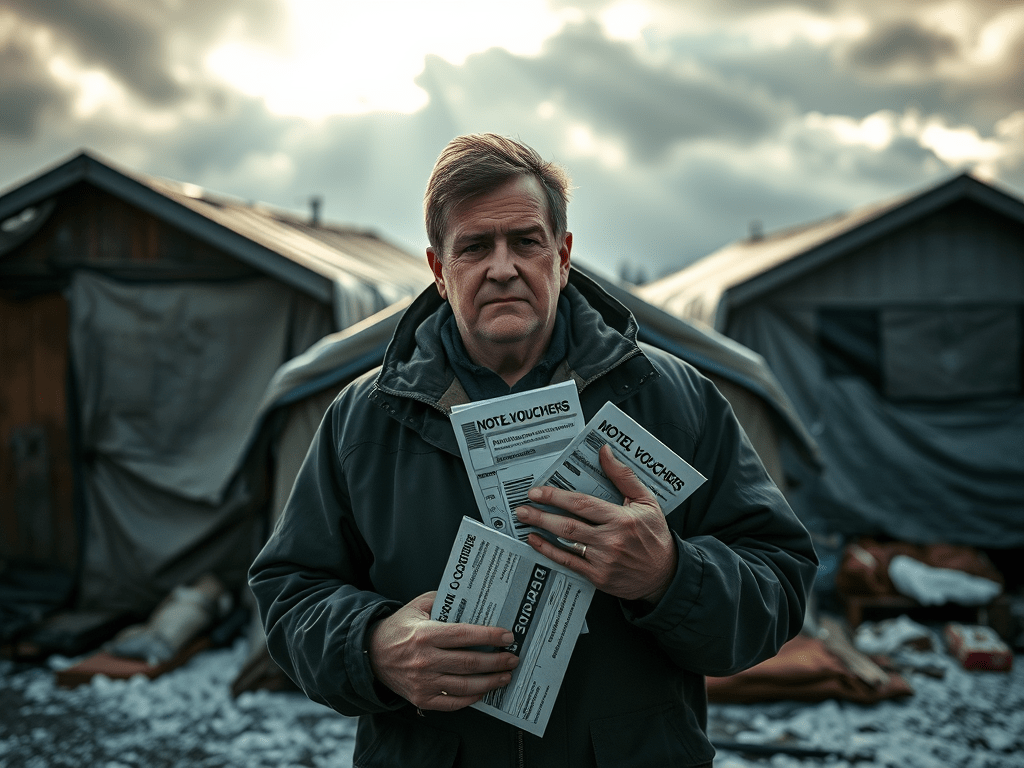



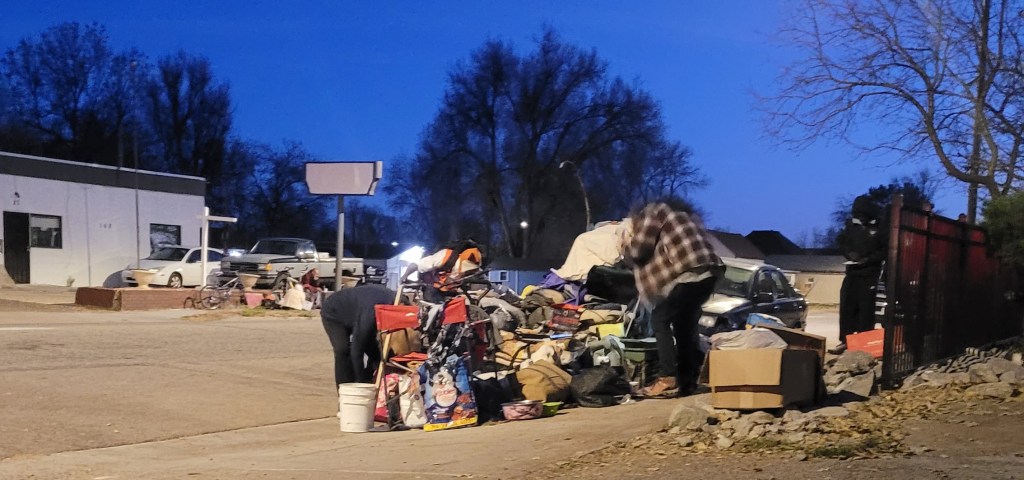





 Operation **Reclaim** Loveland
What do you think?