
Conformity- Interactive Pressure
Why do groups of people behave similarly?
Conformity is the ability of a group to adopt the same expectations, beliefs, attitudes, norms, conventions and rules, and to behave within the confines of these. Deviance is any behavior outside of these.
According to Psychology Today, we may or may not even be aware that this is taking place.
Evolutionarily, conformity kept us alive. Fitting in still compels much of our behavior, as this drive is still quite strong.
Though it’s often derided, conformity isn’t necessarily a malevolent force. At its best, conformity offers a sense of belonging and group identity and can encourage people to adhere to moral standards. At its worst, though, it can bring out a person’s darkest impulses and even be used to justify—and carry out—large-scale atrocities. Psychology Today
In small groups we refer to groupthink, in large groups we reference conformity. If we add a bit of a power differential, we find obedience.
Obedience is when a behavior is carried out as the result of a command or imperative given by someone perceived to have more power, than the person following the order. Similarly, compliance is following a request without understanding or agreeing to the reason (Cherry, 2023: verywellmind).
But we all have free will right?
We each have the ability to think for ourselves, so why would anyone ever comply with a request without believing in it? Take it from the autistic, things get very difficult when you don’t.
So, then this begs the question of how powerful these forces are in our decision making.
Asch
The definitive study on conformity performed by Asch in 1955 found that the power of peer pressure is quite strong.
As a matter of fact, he found that only 23% of participants gave the right answer no matter what their peers were choosing. 72% gave the obviously wrong answer at least once. 5% always sided with their peers.
Compliance
The Copy Machine Study (Langer et al., 1978) found that when making a request, giving a reason- any reason at all- dramatically increased the chances of having the request granted. (No wonder so many of us are over-explainers).
(On a side note, I really hope you watch this clip, because not only does he actually do a great job of presenting the findings of the study, he shows how social psychology findings are used to manipulate the general population. The more you know…
OR
Watch it because it’s a video.)
If you’d like to fill up your heart, I recommend watching “The Power of Asking by Amanda Palmer,” which also describes this interchange between people. (As someone who has historically struggled to ask for help, this was a life-saver).
Milgram
Milgram’s experiment published in 1963 remains one of the most questionably ethical experiments in the history of psychology.
As you can see, the study found that 65% of people would apply a lethal shock if pressured by a person in a white lab coat.
Sixty-Five Percent.
How’s That Free Will Looking Now?
When you start to consider all of this together, it seems like the group itself, in ANY group, is a pretty powerful entity.
But wait, there’s more!
Pluralistic Ignorance
Pluralistic ignorance is another group phenomenon, which compels behavior even when we feel endangered. Pluralistic ignorance describes what happens when aren’t sure what to do in a situation, and we rely on cues from others, even if we strongly feel differently from how the group seems to be acting.
Placebo Effect
Placebo effect describes another way in which what we’re told to anticipate from a stimulus has similar power to the stimulus itself. Harris (2021) describes the many factors working with placebo to contribute to the fact that people given placebo surgeries have similar outcomes to those given necessary surgeries.
Bystander Intervention
When Kitty Genovese was brutalized during a multi-part mugging which led to her death, researchers set out to answer disturbing questions about that night.
Kitty died publicly. She cried and screamed for more than a half hour. Nobody intervened. Nobody notified authorities.
There were at least “38 respectable, law-abiding citizens in Queens watched a killer stalk and stab a woman in three separate attacks in Kew Gardens.” (New York Times)
Researchers developed the Bystander Intervention Model , which continues to be added to and adapted. Through teaching this training, we can increase the feelings of personal responsibility, and create a SCRIPT for acting differently than the group.
Why does it matter?
When you start putting all of this together it becomes easy to see how The Cult of the Ego is possible. The social drives of people as a group actually choose the mechanisms that solidify The Cult of the Ego.
Conformity explains why people avoid “rocking the boat,” and the more each person conforms, the more powerful it is. Think about the power of codifying the rules of conformity into family narratives, and religious ritual.
Think about what it does to have these drilled into your head before you have critical thinking skills, or to make critical thinking a punishable offense.
You may recall this scene from Dead Poets Society.
This scene shows how powerful it is to have just one person give you permission to be authentic, and not conform.
Daughters of the Cult explains how powerful it is to grow up in a group exploiting these mechanisms. Conformity becomes life-or-death, all or nothing.
This perpetuates the cycles, even when the participants know it is wrong, and desperately do not want to participate.
Free Will
Free will still exists, but at a cost, and it’s up against a lot. Leaving these situations costs you everything, and requires resources.
Dissenting has a cost.
Additionally, most people aren’t really capable of dissenting, without being trained to do so.
It’s impossible to train people who can’t access information outside of their group. Think about the Turpins, or if media is tightly controlled.
I also found, when I made the Toxicity Toolkit as a way to even the paying field and open communication and vulnerability in groups, the feeling of accusation that comes from how powerful these forces are, was stronger than any presentation of the Toolkit. The suggestion that we should act independently of these forces really hurt people, which couldn’t have been further from my intention.
This is a recipe for repetition.
This is how you have people taking on the role of the abuser after a lifetime of being abused. This is how good people look the other way, or double down on narratives that rationalize the behavior.
In Man’s Search for Meaning, Frankl talks about his experiences in a German death camp, where compliance, obedience, and human group behaviors led to the loss of humanity.
…selection of Capos which was undertaken by the SS, there was a sort of self-selecting process going on the whole time among all of the prisoners. On the average, only those prisoners could keep alive who, after years of trekking from camp to camp, had lost all scruples in their fight for existence; they were prepared to use every means, honest and otherwise, even brutal force, theft, and betrayal of their friends, in order to save themselves. We who have come back, by the aid of many lucky chances or miracles—whatever one may choose to call them—we know: the best of us did not return.
Dissenting comes at a cost.
Doing the right thing is often punished.
Lots of people live in situations in which their reality and the group reality do not align.
Cognitive Dissonance
Cognitive Dissonance describes the discomfort of these conflicting realities. Psychology today says,
Cognitive dissonance is a term for the state of discomfort felt when two or more modes of thought contradict each other. The clashing cognitions may include ideas, beliefs, or the knowledge that one has behaved in a certain way.
Cognitive dissonance is stressful, and agonizing.
Really, there are three potential outcomes when living in cognitive dissonance.
You remain dissonant
You stay in this state, feeling in conflict perpetually. Not being able to reconcile the conflict of belief leads you to feel wrong all of the time. Your cortisol levels stay high. Your fight, flight, freeze, fawn or flop response stays active all of the time. This inhibits the use of your frontal (thinking/reasoning) brain, and you enter a mode that relies much more on your reptile (surviving) brain. Free will does not thrive here.
You choose your values
You attempt to reconcile the two. You change your beliefs if necessary, and the behaviors that go along with them. You choose the reality you feel is “right,” and dismiss the other. The cognitive dissonance goes away.
You take on the other belief
You attempt to reconcile the two. You change your beliefs if necessary, and the behaviors that go along with them. You choose the reality imposed on you, and dismiss what you believed to be “right.” You double down on proving that this is right. The cognitive dissonance goes away.
The Big Picture
I hope you hung in there through today’s little dissertation. I know it’s a lot of information, but when we put information like this together, we understand trauma and abuse differently.
Learning about these mechanisms, that are just part of being human, freed me from so much of the guilt and shame I carried through my youth. It also enabled me to see how each person involved was responding to their own pressures, their own hardships, their own fears, their own needs.
More importantly, it helps us all to understand that this is a natural part of being human that compels many behaviors. It is possible to educate people, and train them to resist group thinking.
These are the forces that made Helter Skelter possible.
This is why The Crusades were so effective at changing the beliefs of so many cultures.
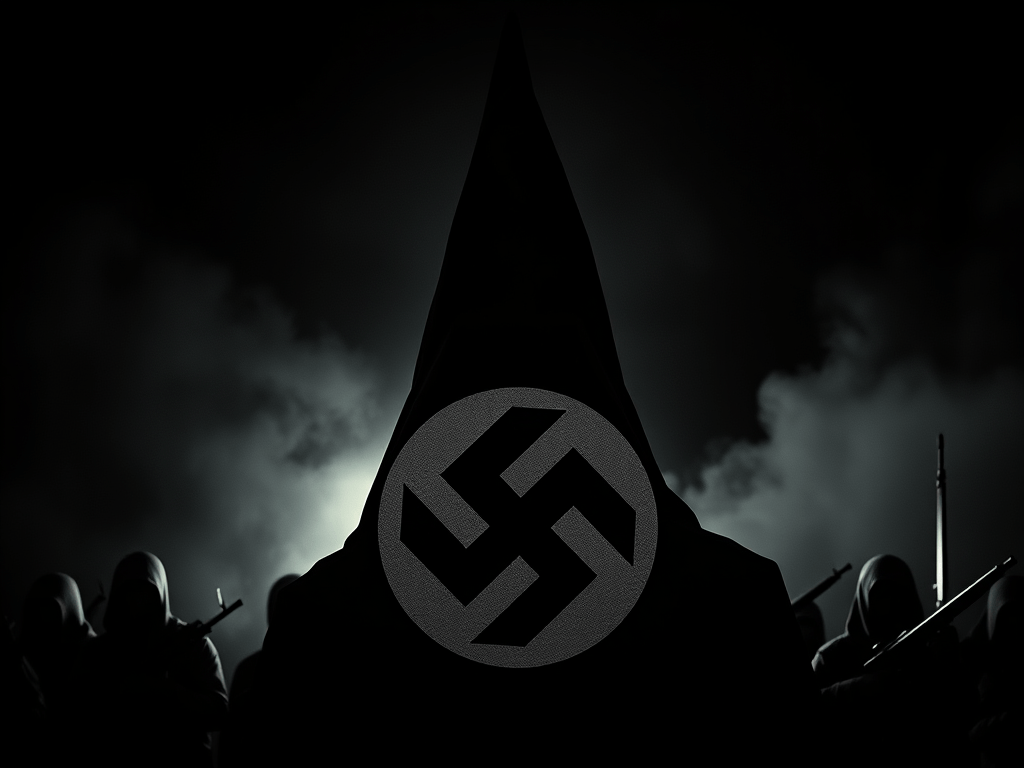
These forces enabled Nazi Germany.
These forces compelled behavior from those in my journey.
These forces show up in most families and workplaces.
If you look around, you might find examples of them at play currently.
References
https://www.psychologytoday.com/us/basics/conformity
https://www.psychologytoday.com/us/basics/cognitive-dissonance
https://pmc.ncbi.nlm.nih.gov/articles/PMC8692770/
https://mentemira.com/5fs-of-trauma-fight-flight-freeze-fawn-flop/
https://www.verywellmind.com/what-is-obedience-2795894
https://www.scientificamerican.com/article/what-happens-to-the-brain-during-cognitive-dissonance1/






















![Time to Dance by Protyus A. Gendher [Glass Ceiling Records]](https://invisiblymisdiagnosed.com/wp-content/uploads/2026/01/image-56.png?w=1024)




 Survivor Literacy
What do you think?