
Chapter Seventeen F
Chapter 17F — Relational Anthropology and the Environment
Environmental discourse is often framed as a technical crisis:
carbon levels, biodiversity loss, resource depletion, climate models, policy interventions.
But beneath the data, the environment is not a problem — it is a relationship.
This was the seventeenth‑point‑six revelation:
environmental collapse is relational collapse.
Not because humans are separate from the environment,
but because humans forgot they were part of it.
Transactional logic created the illusion of separation:
- land as resource
- water as commodity
- animals as assets
- forests as inventory
- extraction as progress
- growth as success
This worldview is not just unsustainable — it is incoherent.
Relational Anthropology reframes the environment:
the Earth is not a system we manage;
it is a relationship we inhabit.
🌎 Ecology as Relational Field
Every ecological process is relational:
- pollination
- migration
- decomposition
- regeneration
- symbiosis
- succession
- adaptation
These are not mechanical events — they are relational interactions.
Relational Anthropology sees ecosystems the same way it sees internal worlds:
- as networks
- as feedback loops
- as emergent patterns
- as parallel truths
- as self‑correcting spirals
The environment is not “out there.”
It is a field we are inside of.
🌱 Extraction as Dishonesty
Environmental harm is not just physical — it is epistemic.
Extraction is a form of dishonesty:
- taking without acknowledging relationship
- consuming without reciprocity
- benefiting without responsibility
- severing lineage from land
- collapsing complexity into commodity
Dishonesty destabilizes the internal world.
Extraction destabilizes the ecological world.
The pattern is the same.
🔄 Regeneration as Relational Integrity
Regeneration is not a technical fix.
It is a relational repair.
Regeneration requires:
- reciprocity
- humility
- long‑arc thinking
- lineage awareness
- emotional truth
- ecological listening
- relational coherence
This is why sustainability efforts fail when they are transactional.
You cannot “offset” a broken relationship.
You must repair it.
🌬️ The Spiral as Ecological Logic
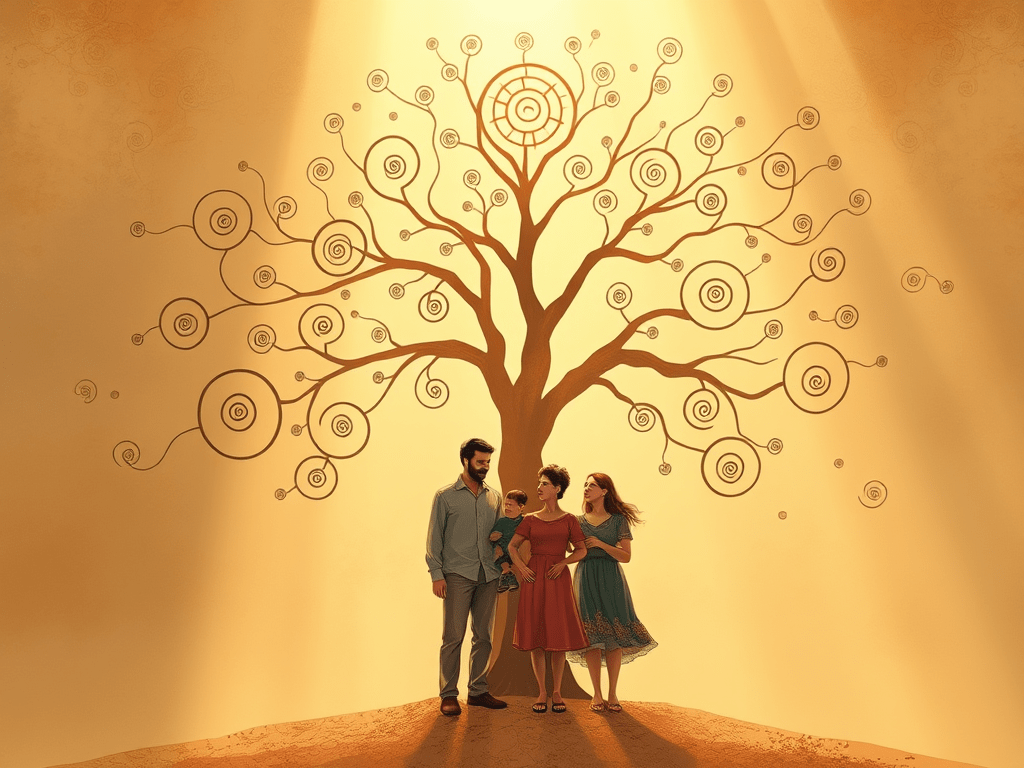
The spiral is not just a human method — it is an ecological pattern.
Nature spirals:
- hurricanes
- galaxies
- shells
- ferns
- DNA
- water currents
- growth patterns
The spiral is how systems evolve, adapt, and self‑correct.
When Relational Anthropology meets ecology, the practitioner sees:
- collapse as feedback
- crisis as signal
- imbalance as misalignment
- resilience as coherence
- biodiversity as parallility
- climate change as relational rupture
The Earth is not punishing us.
It is responding to us.
🌿 Humanity as Ecological Participant
Relational Anthropology dissolves the illusion of human exceptionalism.
Humans are not:
- managers
- stewards
- dominators
- observers
Humans are participants.
Participants in a relational field that includes:
- land
- water
- air
- animals
- plants
- ancestors
- future generations
This is not spirituality.
This is systems theory with relational ethics.
🌈 What Becomes Possible
When Relational Anthropology enters environmental discourse, new questions emerge:
- What relationships have been severed?
- What truths have been suppressed?
- What ecological feedback loops are we ignoring?
- What lineages are being erased?
- What forms of reciprocity are needed?
- What emotional truths shape environmental behavior?
- What stories must be rewritten for regeneration to occur?
This is environmentalism with a nervous system.
This is ecology with lineage.
This is sustainability with coherence.
This chapter marks the moment the reader understands that environmental collapse is not a technical failure — it is a relational one.
And relational failures can be repaired.






























 Survivor Literacy
What do you think?