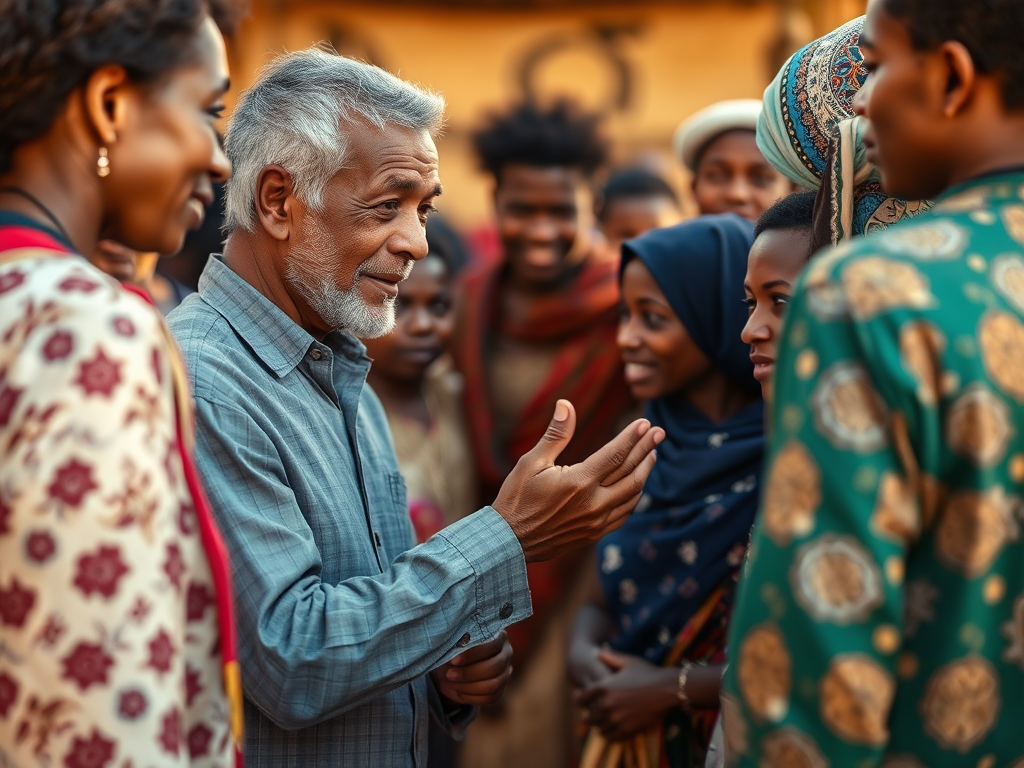
Chapter Twenty
Chapter 20 — Epistaxis of Praxis: The Gentle Purge of a Broken Paradigm
There comes a moment in every discipline where the old methods begin to bleed out. Not violently, not catastrophically, but with the slow, steady release of something that no longer belongs in the body. Anthropology has reached that moment. The epistaxis has begun — not a hemorrhage, but a gentle purge. A necessary letting-go of paradigms that once kept us alive but now keep us small.
I call this moment the Epistaxis of Praxis:
the ritual shedding of methods, theories, and postures that no longer spark connection.
For more than a century, anthropology has carried the residue of extraction, distance, and objectification. It has prized observation over relation, analysis over reciprocity, detachment over presence. These were the tools of a world that believed knowledge required separation. These were the paradigms that taught us to study people without being changed by them.
But we are relational beings.
And relational beings cannot thrive inside transactional epistemologies.
So the discipline begins to bleed — gently, necessarily — as the old forms loosen their grip. This is not collapse. It is clearing. It is the body of anthropology saying, “Thank you for the purpose you served, but we don’t need you now.”
This is the Marie Kondoing of the field.
Not in the trivial sense of tidying, but in the profound sense of discernment:
Does this spark connection?
Does this method deepen relation?
Does this theory honor the humanity of the people it claims to understand?
Does this practice create reciprocity, repair, or resonance?
If the answer is no, then the paradigm must be thanked and released.
Because anthropology is not dying — it is molting.
It is shedding the husk of its colonial adolescence and stepping into a relational adulthood.
It is remembering that knowledge is not a product but a relationship.
It is rediscovering that the field site is not a location but a connection.
It is learning that the self is not a contaminant but an instrument.
The Epistaxis of Praxis is not a crisis.
It is a cleansing.
It is the moment where we stop pretending that objectivity is neutrality and admit that it is simply another form of distance. It is the moment where we stop performing detachment and begin practicing presence. It is the moment where we stop treating people as data and begin treating them as kin.
This purge is gentle because it is guided by gratitude.
We do not shame the old paradigms.
We honor them for getting us here.
We acknowledge the protection they offered — the safety of distance, the illusion of control, the comfort of hierarchy.
And then we release them, because they no longer serve the world we are trying to build.
A world where anthropology is not the study of the Other, but the practice of relation.
A world where knowledge is co-created, not extracted.
A world where the field site is the self, the community, the digital ecosystem, the ritual space, the moment of encounter.
A world where connection is the metric, not the byproduct.
The Epistaxis of Praxis is the discipline’s first honest exhale in decades.
It is the bloodletting that makes room for breath.
It is the clearing that makes room for connection.
It is the purge that makes room for a new anthropology — one that sparks, one that resonates, one that remembers.
Because the future of anthropology is not in the methods we inherited.
It is in the connections we are finally willing to make.



























 Survivor Literacy
What do you think?