
Chapter Five
Chapter 5 — The Self as Field Site
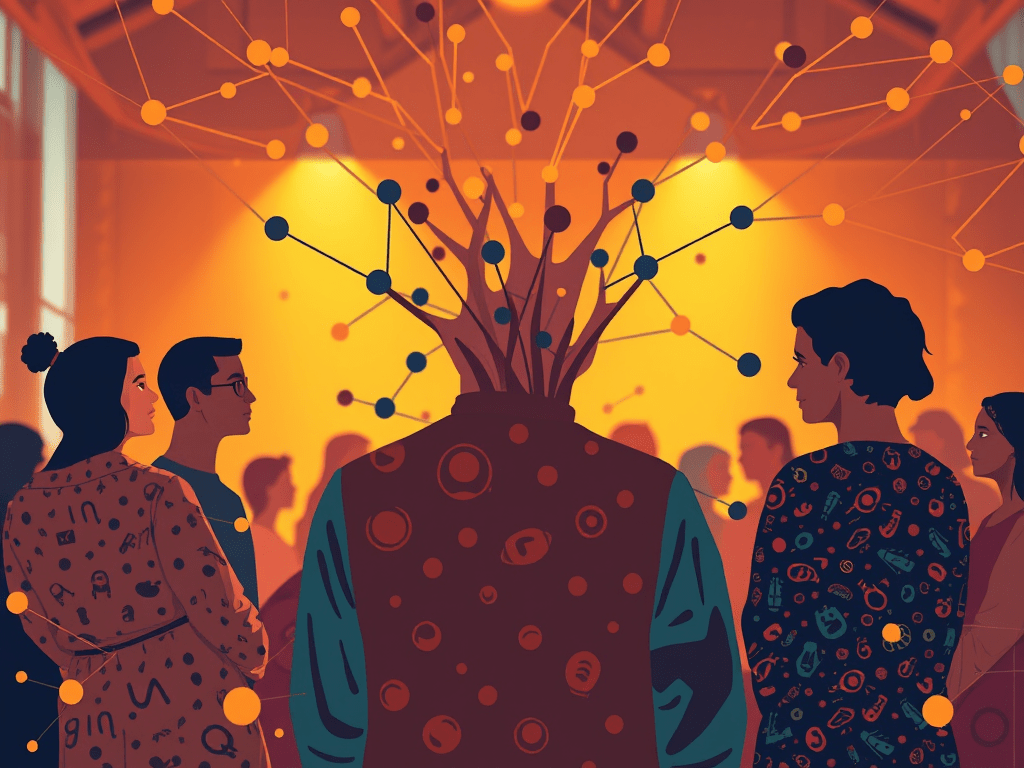
There is a moment in every discipline where the center reveals itself. Not because someone invents it, but because the work has been circling it for so long that the truth finally becomes undeniable. That’s what happened to me that morning, somewhere between the breath and the softening. I realized the field site wasn’t out there. It was me.
Not metaphorically.
Not symbolically.
Not as a clever twist on reflexivity.
Literally.
The self — with its memories, sensations, contradictions, lineages, and emotional truths — is the first terrain any anthropologist encounters. And yet, somehow, the discipline has spent decades pretending that this terrain doesn’t count. That it’s bias. That it’s noise. That it’s something to be bracketed out so the “real” work can begin.
But the real work begins here.
This was the fifth revelation of the morning:
the self is not an obstacle to anthropology — it is the missing field.
The field that makes the other four fields make sense.
The field that holds the emotional logic behind every research question.
The field that shapes what we notice, what we ignore, what we fear, what we seek.
The field that determines how we relate, how we interpret, how we understand.
Anthropologists have always known this, even if they couldn’t say it.
It’s why so many thesis proposals feel discordant — like they’re missing a center of gravity.
It’s why students struggle to articulate what they feel but can’t justify.
It’s why faculty sense depth but can’t name the method behind it.
The missing piece wasn’t theory.
It was parallility — the internal simultaneity that makes the self a legitimate site of knowledge.
When I say “the field site is me,” I’m not collapsing anthropology into autobiography.
I’m naming the hub that connects the entire discipline:
- cultural anthropology
- linguistic anthropology
- archaeology
- biological anthropology
- and the fifth field: the internal world
This fifth field is not a subfield.
It is the center.
The place where:
- emotional truth becomes data
- lineage becomes methodology
- sensation becomes archive
- memory becomes terrain
- honesty becomes rigor
- ritual becomes analysis
This is the anthropology anthropologists have been hungry for — the one that honors the reason they entered the field in the first place. Not to become distant observers, but to understand what it means to be human in a way that includes themselves.
And here’s the part that changes everything:
once the self becomes the field site, the practitioner cannot remain unchanged.
This is not a method you perform.
It is a relationship you enter.
A relationship with your own truth.
A relationship with your own lineage.
A relationship with your own contradictions.
A relationship with your own becoming.
And once that relationship begins, the old academic habits — the distancing, the posturing, the observer reflex — simply stop working. The circles collapse. The spiral begins.
This chapter marks the moment the reader steps into the heart of Relational Anthropology.
The next chapter will explore parallility — the internal architecture that makes this work possible.























 Survivor Literacy
What do you think?