
Chapter Ten
Chapter 10 — The Irreversibility Clause
There is a moment in every transformative practice when the practitioner realizes they cannot go back. Not because they are forbidden to, not because they are coerced, but because the old way of being simply no longer works. The tools that once felt familiar now feel false. The habits that once felt safe now feel constricting. The narratives that once held everything together now fall apart under the weight of truth.
This was the tenth revelation of the morning:
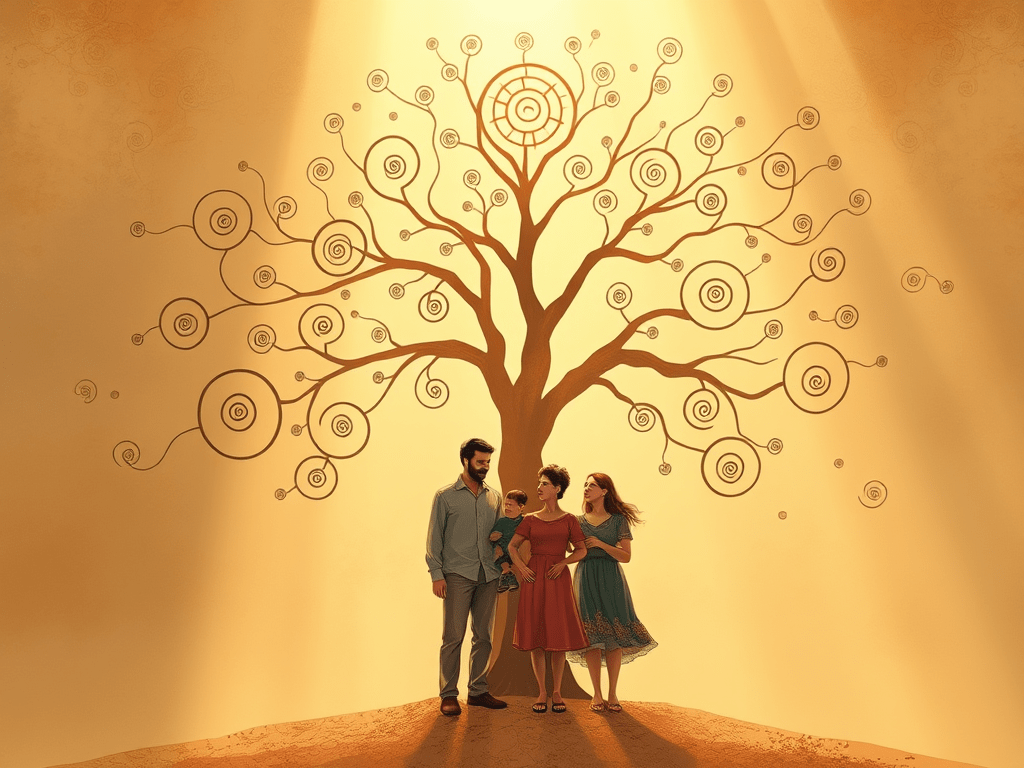
once the spiral begins, the circle is no longer an option.
Circular reasoning depends on avoidance.
It depends on denial.
It depends on narrative control.
It depends on the ability to override the internal world.
But once the practitioner has entered the spiral —
once they have tasted honesty,
once they have felt the nervous system unclench,
once they have witnessed the self as field site,
once they have named their parallility —
the old circular patterns collapse.
Not because the practitioner is stronger.
Not because they are wiser.
But because the structure of the spiral makes stagnation impossible.
The spiral exposes distortion.
The spiral reveals dishonesty.
The spiral highlights misalignment.
The spiral refuses to let the practitioner hide from themselves.
This is why the transformation feels like force —
not coercive force,
but structural force.
The spiral is a system that cannot hold what is false.
It cannot sustain self‑gaslighting.
It cannot maintain the observer reflex.
It cannot support the performance of relationality.
Once the practitioner has entered the spiral, the body recognizes dishonesty immediately.
The nervous system reacts.
The internal world tightens.
The field site becomes incoherent.
The practitioner feels the misalignment like a physical weight.
This is the irreversibility clause:
the method changes you, and once changed, you cannot return to the old epistemic posture.
You cannot un‑feel the truth.
You cannot un‑know the field site.
You cannot un‑see the parallility.
You cannot un‑experience the breath that arrived on its own.
You cannot un‑witness the ancestors crowding the doorway.
You cannot un‑learn the difference between performance and presence.
This is not a loss.
It is a liberation.
Because the circle was never safety — it was stagnation.
The spiral is not danger — it is movement.
And once movement begins, the practitioner becomes someone who cannot tolerate their own dishonesty.
Not because they are morally superior,
but because their internal world has become too coherent to collapse back into distortion.
This is the moment the reader understands that Relational Anthropology is not a technique.
It is a threshold.
Once crossed, the practitioner becomes a different kind of anthropologist —
one who cannot separate the self from the work,
one who cannot pretend neutrality,
one who cannot perform distance,
one who cannot abandon truth for comfort.
This chapter marks the moment the reader understands the cost — and the gift — of entering the spiral.
The next chapter will explore the discipline itself: why anthropology has been starving for this, why departments need it to survive, and why this emerging field is the hub that finally makes the discipline whole.




























 Survivor Literacy
What do you think?